
On a 2018 visit to London, I was fortunate enough to be introduced to a pupil of Edwin Fischer, one Gerald Kingsley, by my longtime friend and colleague (of some 30 years!) Roger Smithson, who was researching and producing a discography of Fischer back when I started my Dinu Lipatti research in the late 1980s.
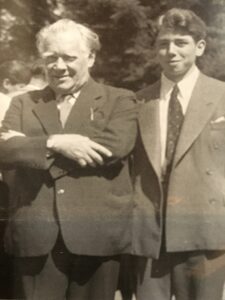
What began as a casual meeting at the British Library cafeteria unfolded into a memorable three-hour conversation during which Kingsley shared captivating stories about his time studying with Fischer, as well as his experiences with other renowned musicians and unforgettable concerts he attended. Around the same period, Kingsley also formed a friendship with composer Nikolai Medtner, whom he visited several times during the last year of Medtner’s life.
Although Kingsley didn’t pursue a career as a professional performer, choosing instead to work behind the scenes in publishing, he carried with him a deep and extensive understanding of musical performance and interpretation gained through his studies and extraordinary experiences in youth. I think that many of his insights are so profound and far-reaching that they transcend casual interest and ought to be regarded as essential knowledge for any classical musician.
I was thrilled when Kingsley agreed to my proposal for a recorded conversation – an opportunity to share with a broader audience not only his insights and reflections, but also vivid recollections of the legendary musicians he had the good fortune to encounter. The result is a richly engaging 90-plus-minute dialogue, interwoven with musical excerpts from the very performances and recordings he mentions – including the world premiere of Strauss’s Four Last Songs, which he attended in 1950 (billed as Four Orchestral Songs in the concert program).
Among the many insights Kingsley offered were revealing reflections on Fischer’s perspective toward interpreting the music of Bach and Beethoven. Fischer believed that a faithful performance required more than a literal reading of the score – it demanded the full presence and emotional depth of the performer. As he expressed in his writings on Beethoven’s sonatas, “Do not let us forget… that it is impossible for the composer to put everything in the score… It’s all very well to examine the manuscript with a magnifying glass to try and see where the C of a crescendo begins, so as to form in it accordance with the text, but one must have the emotional capacity to shape that crescendo in the way that Beethoven intended.”
When it came to Bach, Fischer’s interpretive style might seem unconventional to musicians today who are closely bound to the printed score – yet, as Kingsley pointed out, Fischer may have been truer to the spirit of the music than those who strictly follow the text. He noted that on a harpsichord, engaging a stop produces an extra octave of sound – something the composer would have expected, even if those notes weren’t written in the score. So, Fischer reasoned, why shouldn’t a pianist thoughtfully aim for a similar expansion of sonority on the modern instrument?
Kingsley also offered thought-provoking reflections on the fluidity with which some composers viewed their own creations. In his conversations with Medtner, he discovered that even the composer himself didn’t always hold fixed ideas about how his music should be played. One memorable example: when Medtner gave Kingsley an autographed copy of his Second Piano Concerto, he casually crossed out one of the cadenzas, explaining that he no longer liked it. “So much for the Urtext,” Kingsley remarked wryly.
This lively and far-reaching conversation is filled with remarkable musical insights, as Kingsley and I delve into the artistry of numerous legendary pianists – along with a few other notable musicians – and examine the deeper layers of interpretation that lie beyond the written notes.
A must-hear for anyone passionate about piano playing, the art of interpretation, and timeless music!