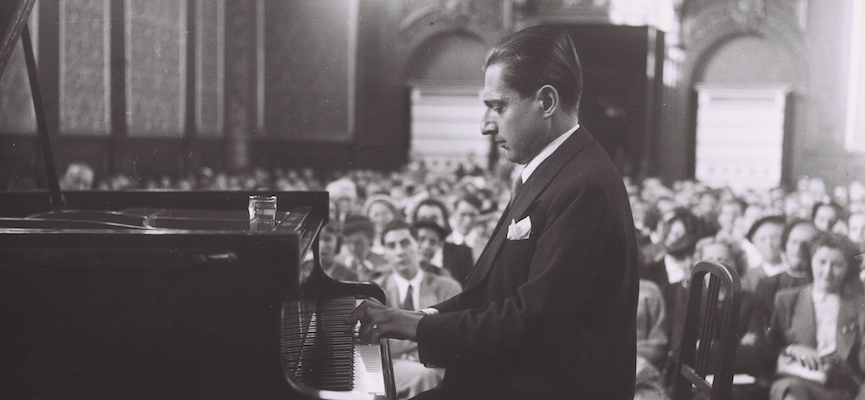
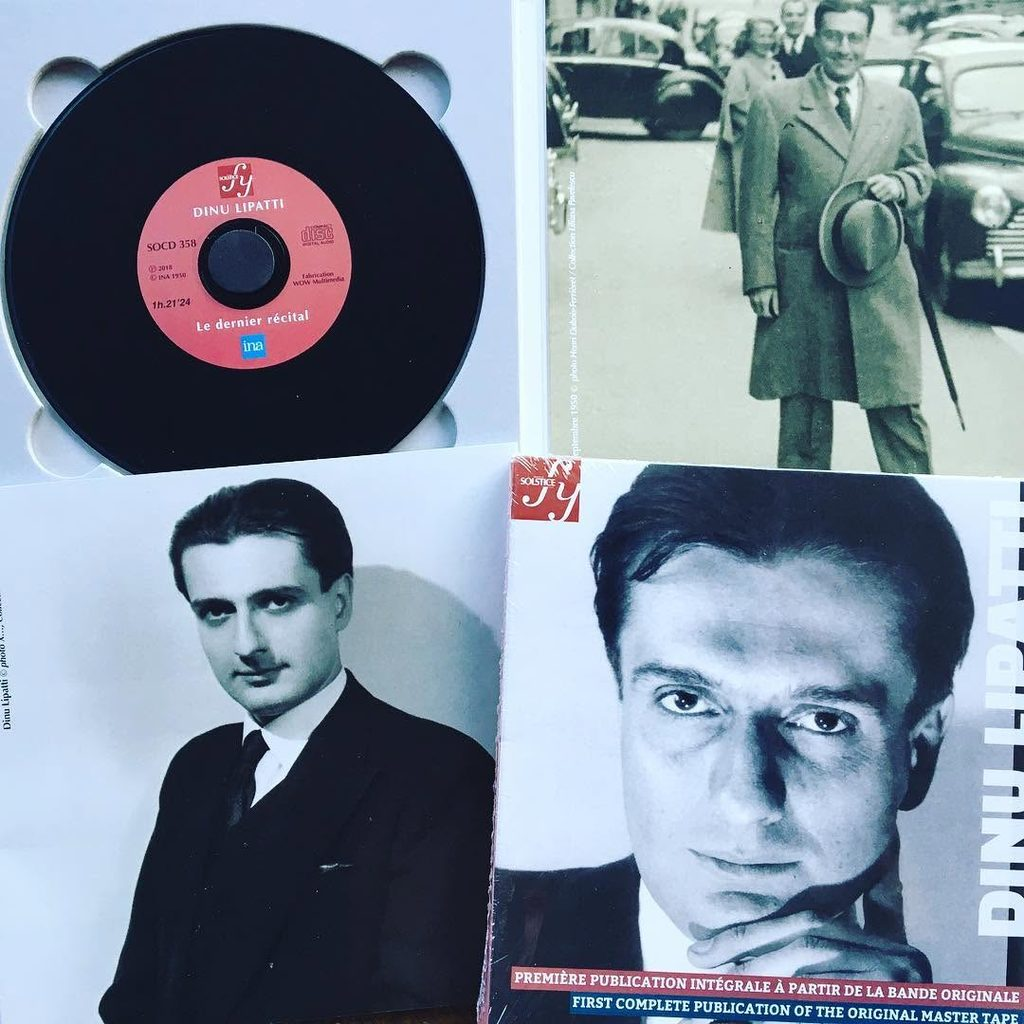
These are updated notes from the extended text that I wrote for the Solstice label’s publication of Dinu Lipatti’s legendary last recital (click here for details) – the first time that the original broadcast tape in Radio France archives was remastered, as opposed to EMI’s copy, which was what has continually been issued since 1957. There are some corrections that I’ve added to this version of details that came to light after that CD was published.
The Solstice reissue was the first time that all the spoken announcements from the radio broadcast were shared, plus Lipatti’s warm-ups before each part of the program – only half of these were shared on previous LP and CD sets. I will also include a few of the rare photos published in the booklet embedded in this text.
Unfortunately the Solstice CD seems not to be available any more – do your best to locate a copy if you can.
In the meantime, enjoy the recording shared here, which is a remastered version of the Solstice presentation, as well as my detailed notes below – they took a very long time to write and I’m delighted to be able to share them!
The last recital of Dinu Lipatti, held at the Besançon International Music Festival on September 16, 1950, was a legendary event. The circumstances leading to the great pianist’s performance were extraordinary, the recital itself was musically remarkable, and the recording of the concert that was broadcast and subsequently released has garnered tremendous critical and public acclaim worldwide.
Dinu Lipatti’s final concert was the pinnacle of a life story that seems almost Hollywood-esque. Born into a bourgeois family in Bucharest, Romania in 1917 (his March 19 birthdate would be April 1 using today’s calendar), the godson to the great composer and violinist George Enescu demonstrated his musical aptitude from a very young age. At the 1933 Vienna International Music Competition, the 16-year-old Lipatti tied for second place, which prompted the great Alfred Cortot to protest and refuse to sign the pianist’s certificate. A year later, Lipatti would begin five years of tutelage in Paris with Cortot, who would say that he had nothing to teach him. With the winds of war in 1939, Lipatti returned to his native land, but on a European tour in 1943 settled in Switzerland, the following year accepting a teaching position at the Geneva Conservatory.
Lipatti began to achieve great distinction as he toured throughout Europe and as his recordings for EMI’s sub-label Columbia received rave reviews and awards (his 1947 Chopin B Minor Sonata won the Grand Prix du Disque). However, the mysterious symptoms that had begun to manifest upon his arrival in Geneva developed into Hodgkin’s Disease, which led to the cancellation of concerts and recording sessions. In early 1949 Lipatti had to be whisked back to Switzerland from Holland, where he had been due to start a 10-day tour, and he was unable to play another concert for 10 months: Witold Małcużyński took his place on a 3-month tour of Australia and scheduled recordings of Bartók’s Third Piano Concerto and the Chopin Waltzes in October were cancelled.
In 1950, experimental cortisone injections funded by wealthy supporters were temporarily able to give Lipatti enough strength to make a final series of recordings on equipment driven to Geneva specially to capture more of the pianist’s artistry on disc. However, his condition soon worsened and he would give only a few more concerts, including a brilliant performance of Mozart’s Concerto K. 467 at the Lucerne Festival on August 23 and a glorious recital at the Besançon International Music Festival on September 16. Eleven weeks later on December 2, 1950, Dinu Lipatti died at the age of 33.
A Less Tiring Programme
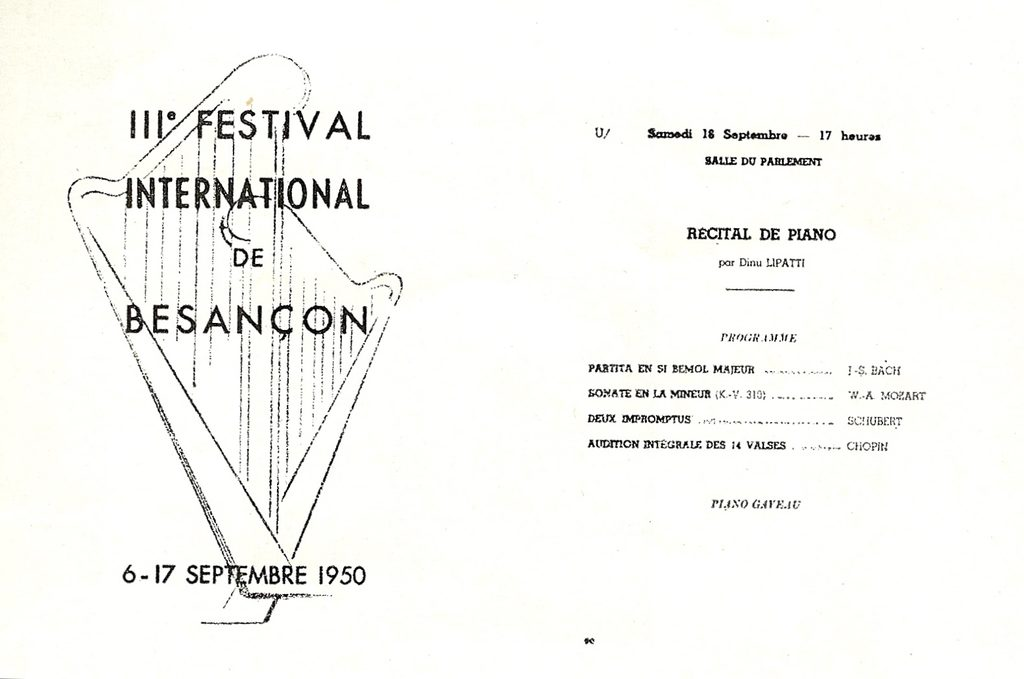
Even when suffering from Hodgkin’s, Lipatti was occasionally healthy enough to give some momentous performances of heroic programmes: his 1948 Salle Pleyel recital featured 50 minutes of Bach, two Études and the Barcarolle of Chopin, and Schumann’s Études symphoniques. However, in order to conserve his strength and reduce the potential for cancellations when his health was more unstable, Lipatti devised a ‘less tiring programme’ for his recitals: Bach’s Partita in B-Flat Major BWV 825, Mozart’s Sonata in A Minor K. 310, Two Schubert Impromptus from Op. 90, and Chopin’s 14 Waltzes. He began preparing this programme while recuperating in 1949, playing it for the first time in Bern in December of that year. (Intriguingly, one earwitness reported that he played as an encore one of the posthumous Chopin Waltzes not included in his recording of the usual cycle of fourteen.)
After Lipatti was contacted to perform for the Besançon Festival, correspondence ensued to organize the details of his appearance and stay. The pianist had to clarify details about the programme, correcting an error by specifying that he was playing the Mozart Sonata in A Minor and not the A Major Sonata with variations and the famous Turkish March. As his booking was confirmed, reservations were made for Lipatti, his wife, his friend Georges Schwob, and his doctor Henri Dubois-Ferrière and his wife Gabrièle to stay at the Hotel des Bains in Besançon.
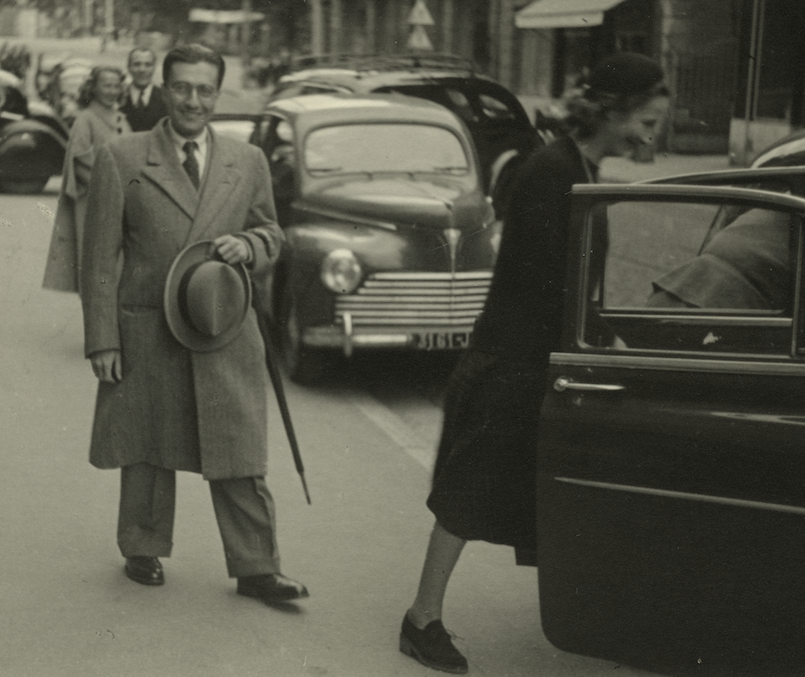
Lipatti in Besançon
The pianist and his entourage arrived in Besançon the day before the recital, and on the morning of September 16 he appeared to be in fine health as Dubois-Ferrière captured some photographs of Dinu, Madeleine, and others at the hotel and approaching the taxi that would take them to the morning rehearsal at the Salle du Parliament.
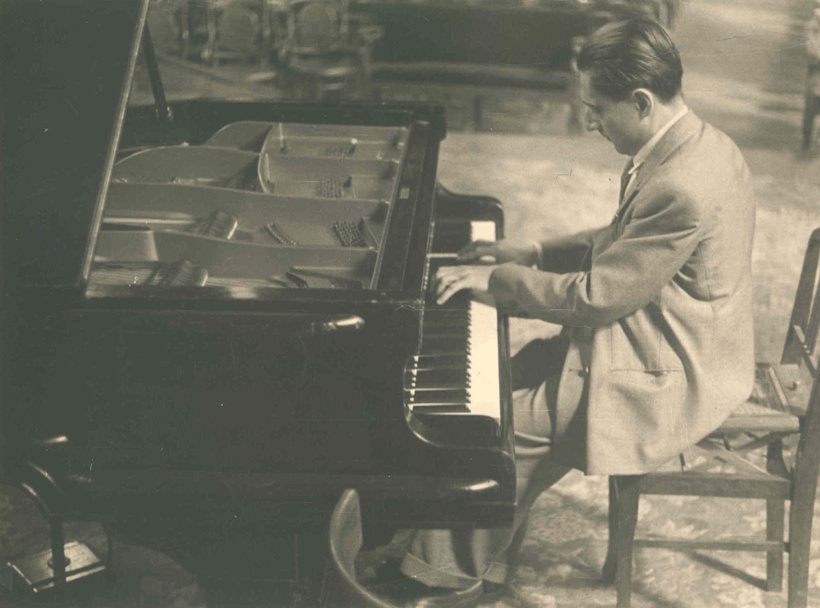
The same roll of film includes a dozen or so photographs of Lipatti practicing in the hall that were taken by both Dubois-Ferrière and festival director Roger Hauert, showing the pianist’s dignified composure at the keyboard and how his hand position varied when he played works by different composers.
As the the day progressed, Lipatti’s condition worsened – he developed a terrible fever and was experiencing painful attacks – and by the early afternoon it was thought that he would need to forego the recital. At 3 pm the doctor called festival officials to tell them that the recital would have to be canceled. The directors pleaded that he attempt to play anything, “even three notes,” and when Lipatti heard that the hall was already full two hours before the concert was due to begin, he felt impelled to perform. By 4 pm he was feeling well enough to think he could at least attempt to play the first half of the programme. Lipatti was escorted to the Salle du Parliament by his wife and Dubois-Ferrière, climbing the stairs with their support. The hall was filled beyond capacity: audience members were seated in chairs and on the steps around the stage, additionally overflowing into the reception area outside the entrance doors.
The Recital
Lipatti walked to the Gaveau piano – a glass of water notably present on the left side – and played arpeggios as a warm-up, a tradition of ‘preluding’ that had been common in the 19th and early 20th century. Despite a minor fumble in his opening arpeggios, he played the entirety of Bach’s B-Flat Partita with exquisite poise and precision. Lipatti made his way to a room off the side of the stage before returning to the piano. His next set of arpeggios modulated from B-Flat Major to A Minor and then he proceeded to play Mozart’s Sonata K.310 with remarkable drive and poetry. Rapturous applause greeted the conclusion of the performance and Lipatti once again left the stage before returning to complete the first half of the programme. Preluding of astounding beauty led into a glorious reading of the central two Schubert Impromptus from Op. 90 (D. 899), an impassioned interpretation of the G-Flat Major Impromptu followed by a fleet-fingered E-Flat Major Impromptu whose momentum and precision belied Lipatti’s ill health.
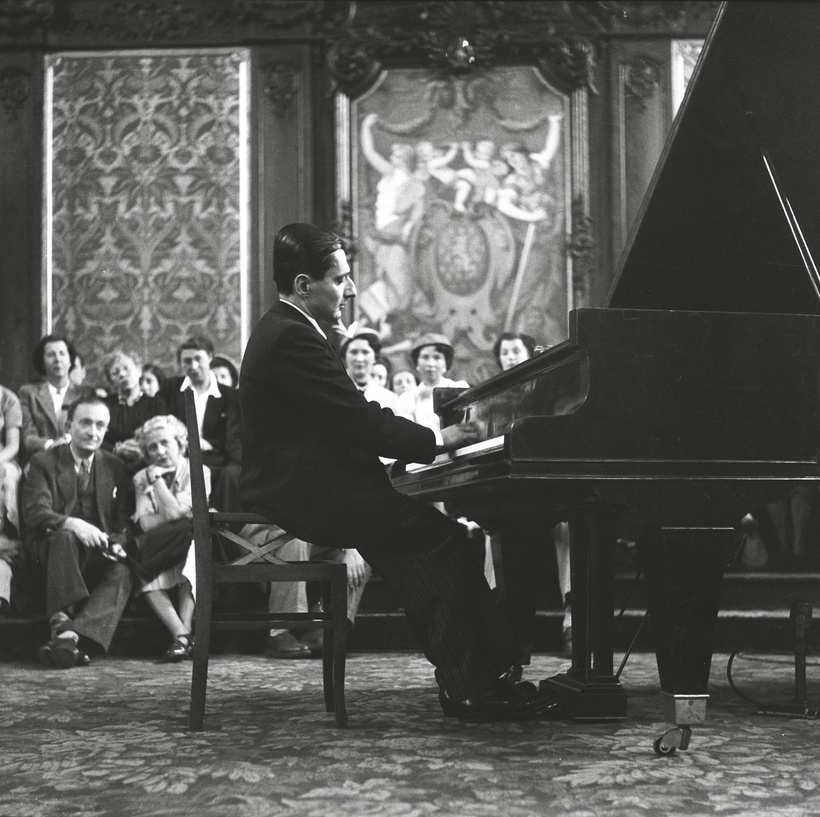
After intermission, the pianist returned to the concert platform for the second half of the programme, the cycle of Chopin’s 14 Waltzes. After preluding, Lipatti launched into his traversal of these works in an order of his own devising; he had stated that because the Waltzes were not composed at the same time and therefore not intended to be played as a set, it made more musical sense to adjust the sequence. (It is worth noting that the order of these Waltzes in recital is slightly different than in the records produced for Columbia two months earlier, as those required strategic arrangement to fit onto 4-to-5-minute 78rpm disc sides.) Lipatti played with flawless characterization and attention to mood, capturing the unique emotional flavour of each work with sensitive phrasing and refined nuancing. However, as the recital progressed, signs of fatigue began to be apparent: he omitted repeats and slightly abbreviated the Waltzes Op.34 No.2 (the 8th Waltz on the programme) and Op. 70 Nos. 2 & 3 (10th and 11th on the programme), and then made a prominent slip in the final measures of the A-Flat Major Waltz Op. 64 No. 3 (the 12th in the recital). Lipatti then played the famous E-Flat Major Waltz Op. 18 – the first Chopin composed – with great vivacity and heroism, leading to a sudden burst of rapturous applause from the assembled audience.
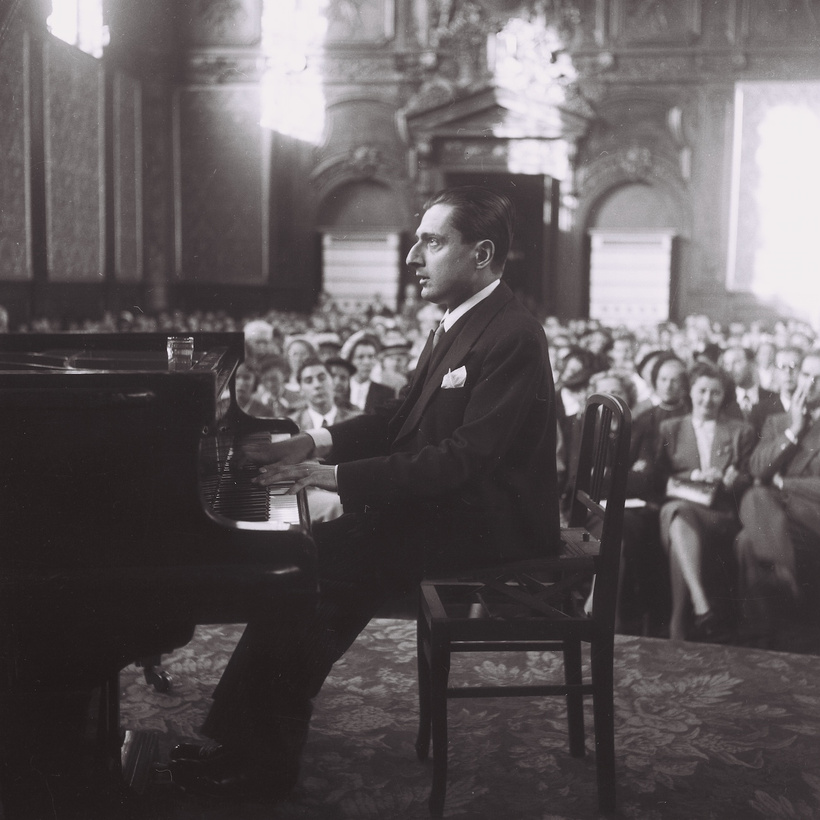
What occurred next is, tragically, perhaps the most famous incident in Lipatti’s life. He began the final work on the programme – Chopin’s Waltz No. 2 in A-Flat Major, Op. 34 No. 1 – only to stop soon after he’d started. He was too weak to continue. He stood up and went back to the artist’s room. The audience sat in silence for what seemed like an age. Eventually Lipatti returned and played Bach as a final prayer, ending his concert career with the Hess transcription of Jesu, Joy of Man’s Desiring, which had been a leitmotif throughout his career as a pianist (it was, in fact, the first piece he played at his first recital in Paris in 1935, in memory of his recently deceased composition teacher Paul Dukas). While the Hess transcription has been posthumously reported to be his sole encore, the local newspapers La République et Le Comtois reviewing the recital stated that Lipatti played three encores, all by Bach. These have not been definitively identified; however, Lipatti had recently completed his own transcription of the Pastorale BWV 590, the Andante cantabile of which was the final work he would play for his wife Madeleine when he last played his piano at home on November 20 of that year. He would play the Bach-Kempff Siciliano in a radio interview two weeks after the Besançon recital (a recording of which has not been found), and one of the newspapers noted Lipatti had played ‘une sicilienne.’ It therefore seems likely that these two works together with Jesu, Joy of Man’s Desiring were his swan song at the end of this moving concert. Unfortunately no recording of this part of the recital has been found.
The Recording
Lipatti’s Besançon recital was originally meant to be broadcast live but given his precarious health it was decided to record the concert for later transmission. Engineers from the Radiodiffusion Française were on site to capture the performance on tape, which would later be transferred to another tape for broadcast, for which Noel Boyer provided the announcements. It was first aired two weeks after the actual concert, on October 1st, and then transmitted again on December 3rd, the day after Lipatti died.
When French Columbia released a 5-LP set to commemorate the fifth anniversary of the pianist’s death in 1955 (FCX 491-495, also available as five individual LPs), they included the two Schubert Impromptus from the Besançon recital on one of the records (FCX 495). These two Schubert pieces were the only compositions programmed at the recital that Lipatti had not commercially recorded in his valedictory studio sessions in July 1950.
Around that time, Jacques Leiser, who would later become an artist manager based out of New York, was working for Pathé Marconi (the French branch of EMI) in Paris, and while he was searching the Radiodiffusion Française archives for Furtwängler broadcasts for possible release, he came across the catalogue card for the Besançon recital tape. He brought the recording’s existence to his supervisors’ attention and suggested issuing it, but they were not interested because the recital featured works already in Lipatti’s studio discography and the sound quality of the tape was lower than commercial standard.
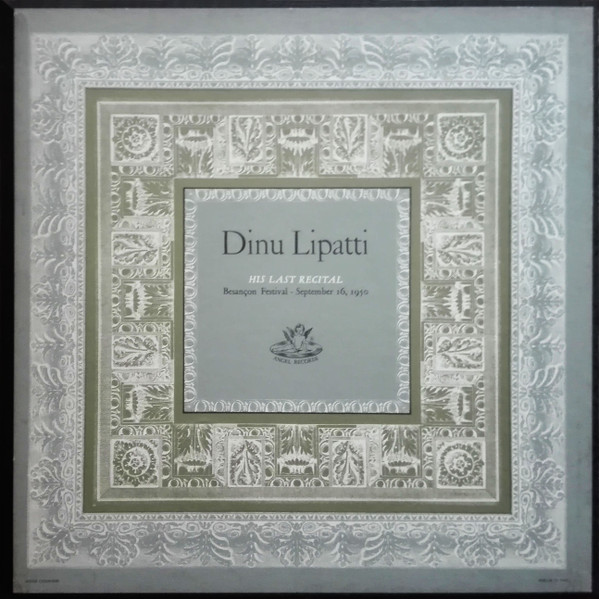
Leiser continued to make a case for the recital’s release and it was eventually decided to issue the performance on French Columbia (FCX 698-699) and in the United States on EMI’s recently-founded Angel Records (Angel set 3556B). At this time, American Columbia held the rights to Columbia recordings produced in Europe, which prevented EMI from releasing Lipatti’s UK Columbia discs in the US. Because the Besançon recital was not a studio recording and as Lipatti was under contract to the parent company EMI at the time of the concert, the performance could be issued on EMI’s Angel label in the US, thereby giving them an exclusive Lipatti release in that country.
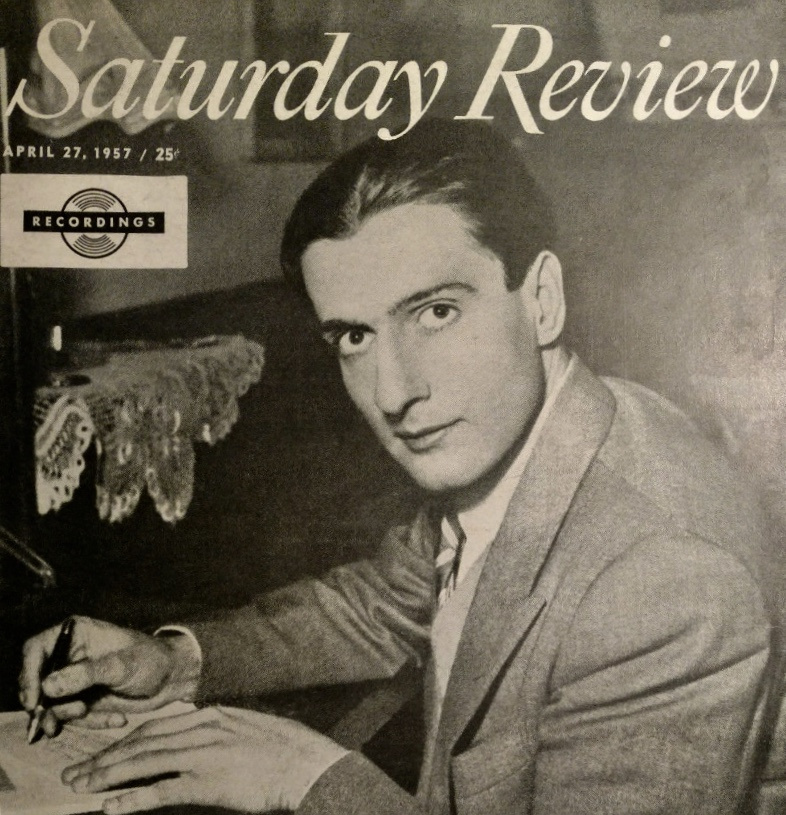
The set received far more effusive critical and public acclaim than the reluctant executives had expected. The American magazine Saturday Review of April 27, 1957 ran a cover feature on Lipatti and the release, with renowned critic Irving Kolodin waxing rhapsodic about the performance, and praise for the playing was universally rapturous amongst critics and fans alike. It was subsequently issued around the world to more rave reviews, and the recording has since become a classic of the gramophone, one of the most famous recorded concerts of all time.
Upon the recording’s release, critics and listeners alike were intrigued by Lipatti’s preluding before the Bach and Mozart works in the programme, as this was a tradition mostly out of vogue at the time, despite Wilhelm Backhaus having continued the practice through to his own final concert in 1969. Although the applause and preluding prior to Lipatti’s performances of the Bach and Mozart were included in the set, for some reason the applause and warmups before the Schubert and Chopin were not – a rather odd inconsistency. On this current CD, the first ever remastering of the original radio tape since the concert’s initial release in 1957, Lipatti’s preluding is presented complete for the first time, together with all of the applause and announcements from the historic 1950 broadcast.
Unpublished Parts of the Recital
Questions have circulated for years about Lipatti’s failed attempt at the final Waltz on the programme and the Bach with which he closed the concert. One radio engineer has been quoted as saying that he had stopped recording the performance because the final moments of the recital seemed too personal. It is possible that the recording equipment was turned off when Lipatti left the stage and was absent for a significant period of time, and that it was then not turned back on when he emerged for his final appearance, but this is not a foregone conclusion. Nevertheless, there is no trace of these parts of the recital in French radio (INA) archives and only the complete works already released on record are known to have survived.
There was one tantalizing possibility that suggested that Lipatti’s encore performance of the Bach-Hess Jesu, Joy of Man’s Desiring might have survived. On September 6, 1951, the Besançon Festival opened the season with a memorial concert to Dinu Lipatti conducted by George Enescu and featuring Lipatti’s widow Madeleine and student Béla Siki as soloists. Festival director Roger Hauert made a moving speech to introduce the concert and announced that the audience would hear Dinu Lipatti playing ‘the final notes of the recital of September 16, 1950… the last encore of the last concert of Lipatti’ before proceeding to play a recording of Jesu, Joy of Man’s Desiring over the sound system in the hall. After some audience noise and orchestral musicians warming up for the first few seconds before being shushed by more attentive attendees, the hall was filled with reverential silence as the audience listened to a recording of Lipatti playing this work. While the sound of the broadcast of this 1951 concert featuring this recording played through the hall speakers was less than ideal, it was obviously to be hoped that this was indeed a recording of Lipatti’s Besançon performance, as Hauert’s languaging suggested. However, spectral analysis tests on computer have been carried out by two parties and it was conclusively revealed that it was actually Lipatti’s studio recording of September 24, 1947 (Columbia LC 30) that was played over the sound system at that 1951 tribute concert.
It is still possible that a transcription disc of this encore or other parts of the recital that were not transferred to the broadcast tape might be found: in fact, at least one does exist. There was one part of the original radio tape that differed from commercial releases of the recital: several measures were missing from the Schubert G-Flat Impromptu, a rather abrupt cut that made it clear that some music had been excised (the second half of measure 16 to the end of measure 24). However, the performance as issued is complete, with no music missing from the recording.
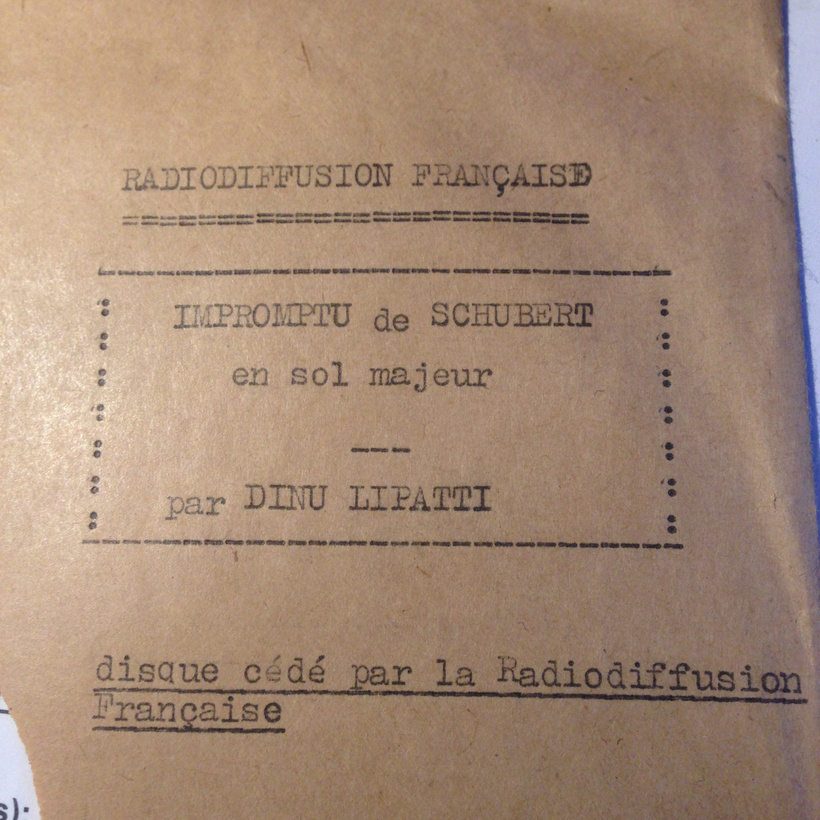
In 2015, an original transcription disc made by the Radiodiffusion Française of this particular Schubert Impromptu performance that had belonged to Madeleine Lipatti was found in the collection of Werner Unger; it had come to him via the family of the late Marc Gertsch, a Lipatti fan who had inherited some of Madeleine’s possessions. When this disc was transferred in my presence that year, the reason for the cut in the broadcast tape became evident: Lipatti’s finger slipped and hit a wrong note in the bass at the beginning of measure 20, which was in the middle of the excised portion of the radio tape. It is unclear whether it was the pianist, his wife, or the radio producers – or a combination thereof – who made the decision to edit out the section containing this flub, but clearly someone chose to cut some of the performance in order not to broadcast the error when the recital was aired.
It was assumed that only the edited broadcast tape that was missing these eight and a half bars was available and that in order to present the Schubert G-Flat Impromptu in its entirety on a commercial release, audio engineers simply replaced the missing measures with matching musical content from later in the work: the music in measures 17 through 23 is identical to that in measures 63 through 69. However, the music in bars 16 and 24 do not fully match the content of bars 62 and 70 – and yet the commercial release features all of the music from the composition.
It therefore appears that Madeleine Lipatti provided the transcription disc that we now know was in her possession and that sound engineers seamlessly spliced together a composite performance of the entire composition using both her disc and the broadcast tape, cutting out the error while presenting all of the music from the score – or that engineers had access to a completely unedited tape of the concert. Madeleine surely wanted to preserve her husband’s reputation as a perfectionist: indeed, Lipatti himself had stated in an interview that he enjoyed the recording process as one could ‘eliminate whatever is not good’, and so removing this somewhat glaring wrong note seems to have been consistent with that desire. The editing was so skillfully accomplished that it has been completely unrecognized the entire time that the recording has thus far been available – even with attentive listening it is virtually impossible to detect. Computer testing of the issued version indicates that the section from measures 17 to 20 is a 100% match to the section from measures 63 to 66 – they can be played simultaneously in perfect synchronization – but the other portions edited into the section missing from the broadcast tape match that part of the score in Madeleine’s transcription disc.
The present CD includes the previously unheard measures from this same record that had been given to Madeleine Lipatti by the Radiodiffusion Française, so on this CD we can for the first time hear the work exactly as Lipatti played it at his legendary Besançon recital. The slight flub at measure 20 (37:44 in the YouTube clip shared in this post) is in fact a very touching and human moment, which seemingly led the pianist to add even more gravitas and dramatic shaping to his phrasing in the measures immediately following.
The existence of this transcription disc raises the question as to whether the unedited tape or other transcription discs of the concert have survived, especially of Lipatti’s attempt at the final Chopin Waltz (before the equipment would have been turned off, if in fact it was) and of the encores. Alas, nothing of the kind has been found in French radio archives or in private collections, although it is possible that any such discs or tapes could have ended up in private hands, as was the case with that of the Schubert Impromptu.
Legacy
Dinu Lipatti’s last recital stands as a testament to the power of music, yet the event could easily have disappeared into thin air as have countless performances by legendary musicians over the centuries. Lipatti very nearly didn’t play the concert – but he did, it was recorded, it was broadcast, and it was made commercially available. Also making real the tremendous poignancy of the occasion are eight photographs of the recital taken by local photographer Michel Meusy on his Rolleiflex camera, showing the audience seated all around the piano observing Lipatti with the same rapt attention with which he himself was playing. Lipatti’s face – serene one moment, pained the next – is indicative of the breadth of emotion that the musician brought to this legendary concert. These images together with the now famous recording of this concert are a gripping tribute to one of the most acclaimed musicians of the 20th century in the throes of his final public performance.
Nadia Boulanger, Lipatti’s composition teacher (and spiritual teacher, as he called her), advised music lovers to “hear these records of Dinu Lipatti, hear them many times; surround them with silence, without which there is no real attention, and you will understand what message they deliver.” Almost 70 years after Lipatti’s mythic Besançon performance, music lovers the world over can now both hear and see more than ever before what transpired on that momentous occasion, with a greater appreciation of Lipatti’s profound music-making and the captivating atmosphere of his very moving final public performance.
© Mark Ainley 2018