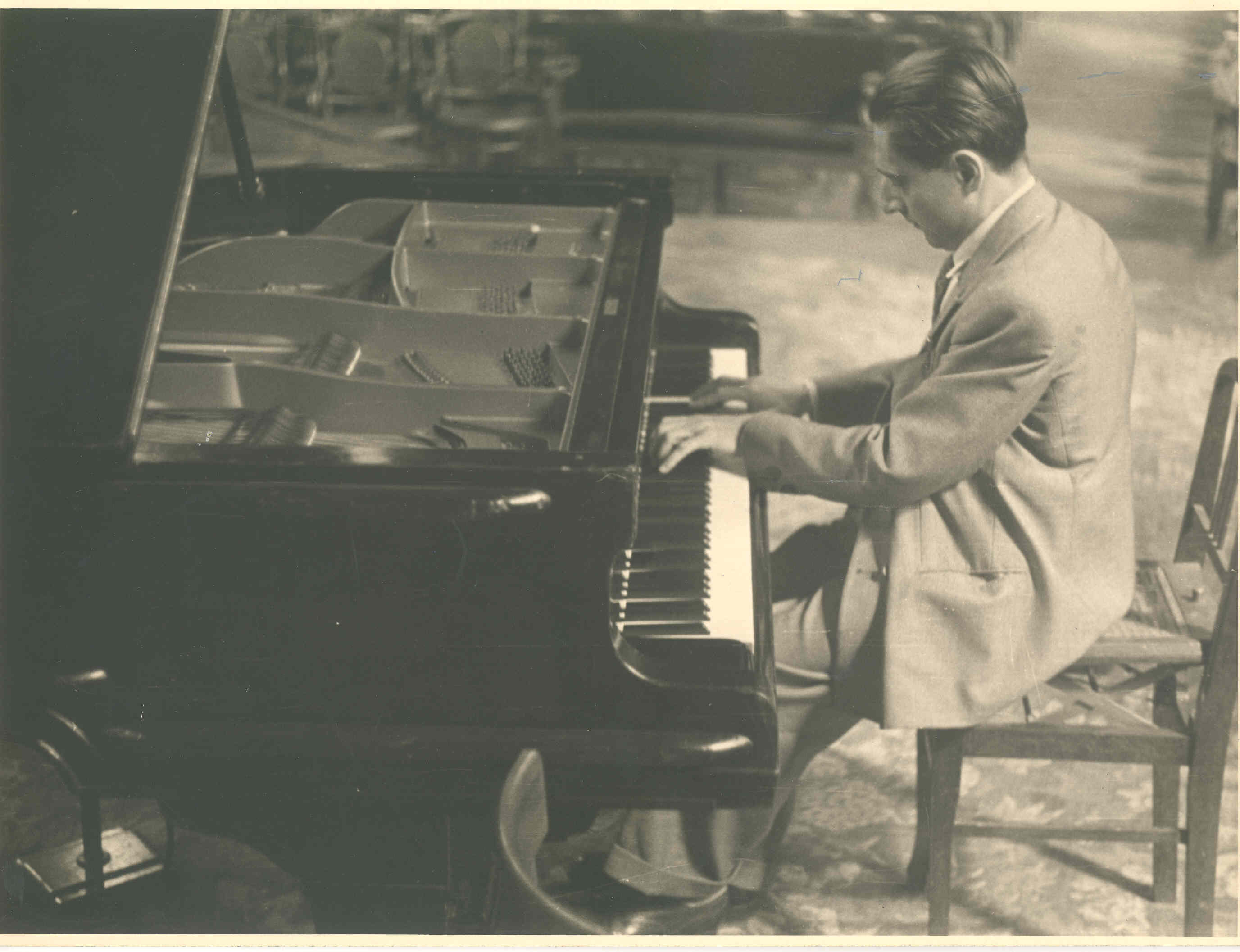
With 2025 being the 75th anniversary of the death of Dinu Lipatti, my colleagues in Romania have prepared a new tribute book to the pianist, for which I was invited to contribute a chapter. As the book will be mostly in Romanian, with simply brief overviews in English, they have graciously given me permission to post my complete 20-page chapter on my website – in English.
Here it is: my reflections on how much more we know about Lipatti now than music lovers did at the time of his death 75 years ago, as a result of posthumously discovered recordings and details learned about them through my and others’ research.
Beyond the Myths: The Evolving Legacy of Dinu Lipatti
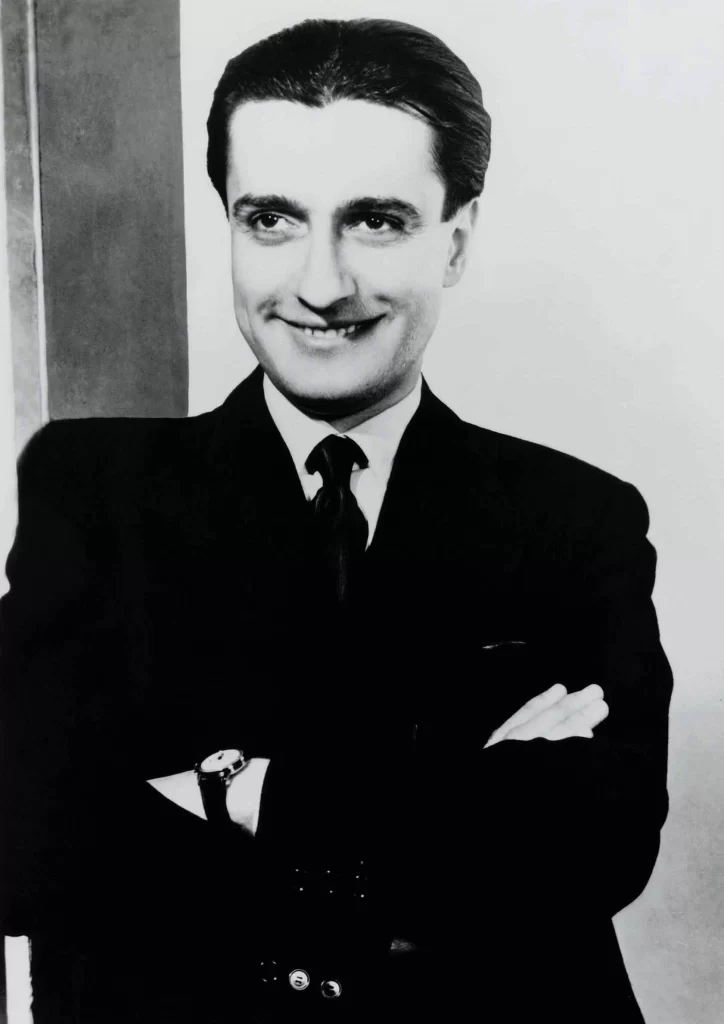
Since Dinu Lipatti died on December 2, 1950 at the age of thirty-three, most listeners have known little about him other than the stories printed on their sleeves of his handful of critically acclaimed studio recordings. Those biographical details – largely culled from the writing of his recording producer Walter Legge – painted him as a frail, perfectionist genius who recorded sparingly due to illness and perfectionism. These stories were repeatedly shared uncritically for many years alongside the same few posed studio photographs, creating a mythical but misleading portrait of the pianist. Over the last few decades, with the discovery of important archival documents and numerous unofficial recordings, we have been able to both hear and understand Lipatti much more fully.
A Distortion of His Legacy
Lipatti’s extraordinary talent was recognised by his contemporaries: legendary pianists like Backhaus, Cortot, Haskil, Kempff, and Schnabel, as well as composers and performers including Boulanger, Hindemith, Honegger, Menuhin, Poulenc, and Stravinsky, all admired his artistry, and since his passing, he has been considered the ne plus ultra pianist by many headlining pianists of subsequent generations. Yet the stories about him that have circulated posthumously distorted listeners’ perceptions of his playing. They suggested that his limited discography was due entirely to perfectionism and illness, rather than a combination of missed opportunities, bad luck, and mismanagement; that the restricted sound of his studio recordings reflected the full scope of his sound world, rather than various constraints of his final years. In truth, Lipatti possessed extraordinary power, drive, and imagination – and he wanted to record far more than circumstances allowed.
The Birth of a Myth
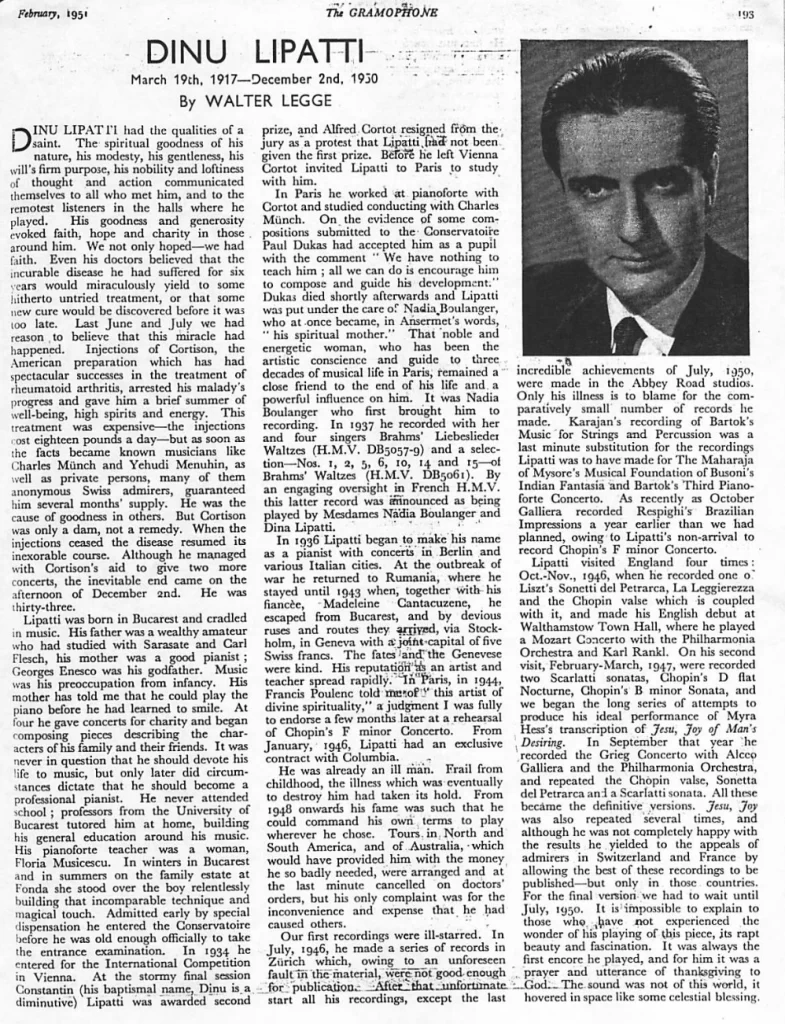
Much of this mythology originated in Legge’s memorial tribute to the pianist in the February 1951 issue of Gramophone magazine, which became the source for decades of LP and CD liner notes. (Some of these inaccuracies were also regularly repeated by Lipatti’s widow Madeleine.) According to Legge, Cortot resigned from the 1934 Vienna Music Competition jury when Lipatti was denied first prize and immediately invited him to Paris to study with him. Legge stated that he had first heard him play in a rehearsal of Chopin’s F Minor Concerto in the mid-40s and claimed that Lipatti had never played Beethoven when they first met, only tackling the Waldstein Sonata in the last two years of his life at Artur Schnabel’s insistence, and he would have required years to prepare major concertos – a timeline cut short by leukaemia. Even with experimental cortisone treatments, Lipatti’s last recital ended with him too weak to finish the final Chopin Waltz on the program, and he played Bach’s Jesu, Joy of Man’s Desiring as a final prayer. He died a few months later.
Setting the Record Straight
Some of these oft-repeated details are relatively small distortions: Cortot did not resign from the Vienna Competition jury (which was in 1933, not ’34) but merely withheld his signature from Lipatti’s certificate in protest of his second-place tie, and he did not actually invite the young pianist to study with him, though he welcomed him warmly when Lipatti went to Paris of his own accord the following year. (How deeply Cortot admired him is now better documented: at one master class he remarked, “There is nothing that I can really say – that was perfect.”) Lipatti never played Chopin’s F Minor Concerto – only the E Minor – and he died not of leukaemia but of Hodgkin’s Disease. And his final recital ended not with a single Bach encore but, according to newspaper reports, with three (likely the Bach–Kempff Siciliano and a movement of a Pastorale he had recently transcribed before the Bach-Hess Jesu, Joy of Man’s Desiring). Such embellishments may seem harmless, yet they contributed to a portrait that obscured the fuller reality. Far more consequential, however, are the myths surrounding his repertoire and recording activity, where surviving documents uncovered decades after the pianist’s death directly contradict what Legge had posthumously claimed.
The Truth About Lipatti’s Repertoire & Recording Career
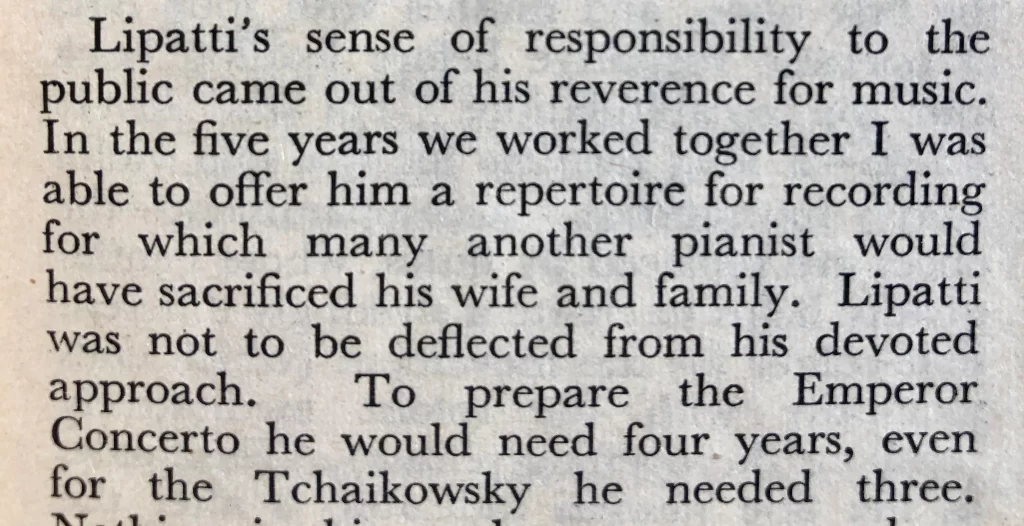
Legge’s published writings provided a deeply distorted impression of Lipatti’s approach to expanding his repertoire and producing recordings. It is simply not true that Lipatti had not played Beethoven before meeting Legge, nor that he played only the Waldstein Sonata in the last two years of his life because Artur Schnabel had urged him to play it: Lipatti had performed four Beethoven sonatas publicly since the 1930s and had programmed the Waldstein as early as 1943, even broadcasting it on Swiss radio that year. More damaging is Legge’s assertion that Lipatti required years to prepare certain works before recording them, a claim that not only misrepresents the speed at which Lipatti could master new repertoire but which also distorts the pianist’s true intentions about preserving his performances: Legge’s oft-quoted essay claimed that he “was able to offer him a repertoire for recording for which many another pianist would have sacrificed his wife and family,” but that Lipatti “would not be deflected from his devoted approach,” while stating that the pianist needed three years to prepare the Tchaikovsky First Concerto and four for Beethoven’s Emperor Concerto. However, actionable memos in EMI’s archives signed by Legge himself while Lipatti was still alive clearly contradict these statements.
A memo dated 23 February 1948 notes that “Lipatti has his heart set on doing a Beethoven Concerto in 1949” and suggests the Emperor (which Legge seems not to have realized Lipatti had played twice in Bucharest in 1940-41) for release in 1950. A flurry of exchanges followed, and handwritten notes confirm that the Emperor was approved by the Repertoire Committee. Obviously, a work Lipatti had already performed would not require four years of preparation, nor would he have proposed a Beethoven Concerto if he were unwilling to record it promptly. The fact that it did not happen truly was due to Lipatti’s illness, but it was certainly not on account of any hesitation on his part, as Legge claimed.
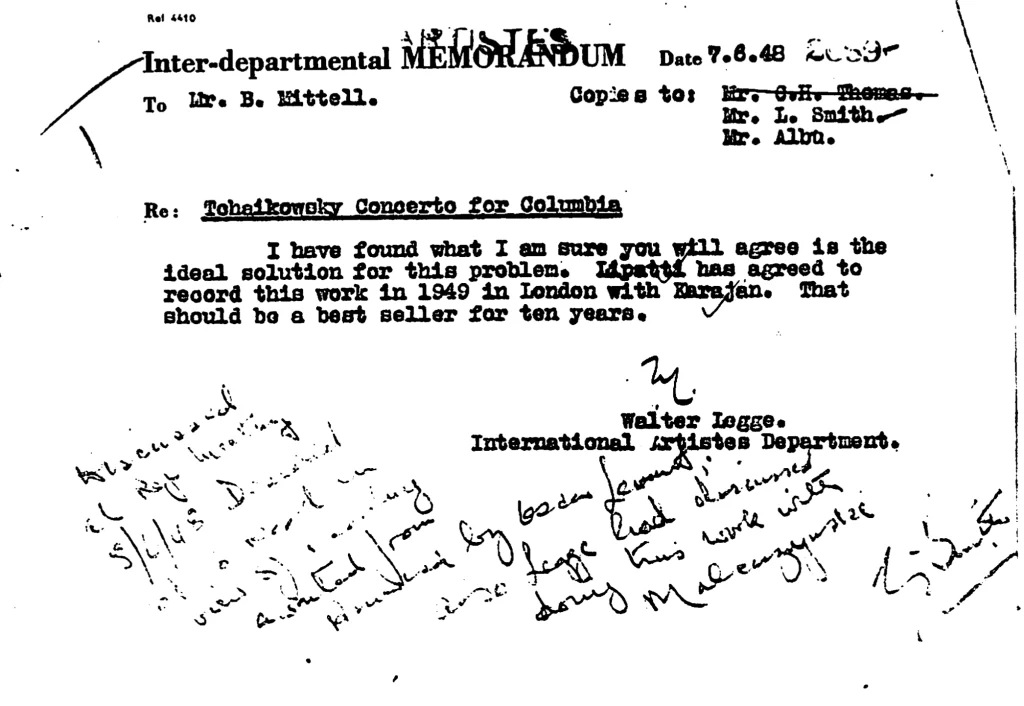
Another memo, dated 7 June 1948 with the heading “Tchaikowsky Concerto for Columbia,” finds Legge writing: “I have found what I am sure you will agree is the ideal solution for this problem. Lipatti has agreed to record this work in 1949 in London with Karajan. That should be a best seller for ten years.” (Had Legge realized that Lipatti’s recordings would continue to be revered three quarters of a century later, he might have been more pro-active.) A note on the memo reads: “Discussed at Rep Meeting 8/6/48. Decided not to record in view of … recording from America by Oscar Levant. Also Legge had discussed doing this work with Małcużyński.” Legge’s assertion that Lipatti’s perfectionism was the reason he was unwilling to record this work – which he had not yet played – is a complete inversion of the truth and the pianist’s actual inclinations, especially egregious given that it was the label’s decision not to pursue the recording and not Lipatti’s.
Lipatti’s Intentions and Early Recording Challenges
Definitive evidence that Lipatti wished to record extensively can be found in an unpublished letter to his then-fiancée Madeleine, written soon after EMI approached him in early 1946. Explaining why he chose Columbia (their sub-label) over the more established His Master’s Voice, Lipatti noted:
“His Master’s, some 20 years older than Columbia, already has in its catalogue almost the entire piano repertoire, recorded by all the old artists as well as the new, such that if I were to propose this piece by Chopin or that piece by X, they might be reluctant to accept, already having it in their catalogue, sometimes with two pianists (for example: Chopin’s B-Flat Minor Sonata, His Masters has with Cortot and Rachmaninoff, so it’s difficult for me to be a third in the same catalogue). In contrast, Columbia has only recorded orchestral works extensively, and for piano the field is virtually empty, as they have signed Egon Petri … and … no one else. So with them I can record all that I want, without having to consider HMV’s catalogue.”
In light of Lipatti’s own statements about wanting to make numerous recordings – and his specific requests to Legge to record more – it seems mystifying that the producer could write in his memorial essay, “Time without number he said to me… ‘Let us give our lives to making records together,’” and then claim, “only his illness is to blame for the comparatively small number of records he made.” While it is clear that illness prevented some projects from moving forward, Legge’s claim that it was both sickness and perfectionism that were responsible for him not recording works he had requested and agreed to is dishonest to say the least.
However, even accounting for missteps and later misrepresentations, Legge and Lipatti’s illness were not the only factors responsible for the limited number of recordings that Lipatti produced: bad luck, a lack of foresight, and postwar socio-economic conditions all played a major role in constraining the pianist’s discography.
Limiting Factors
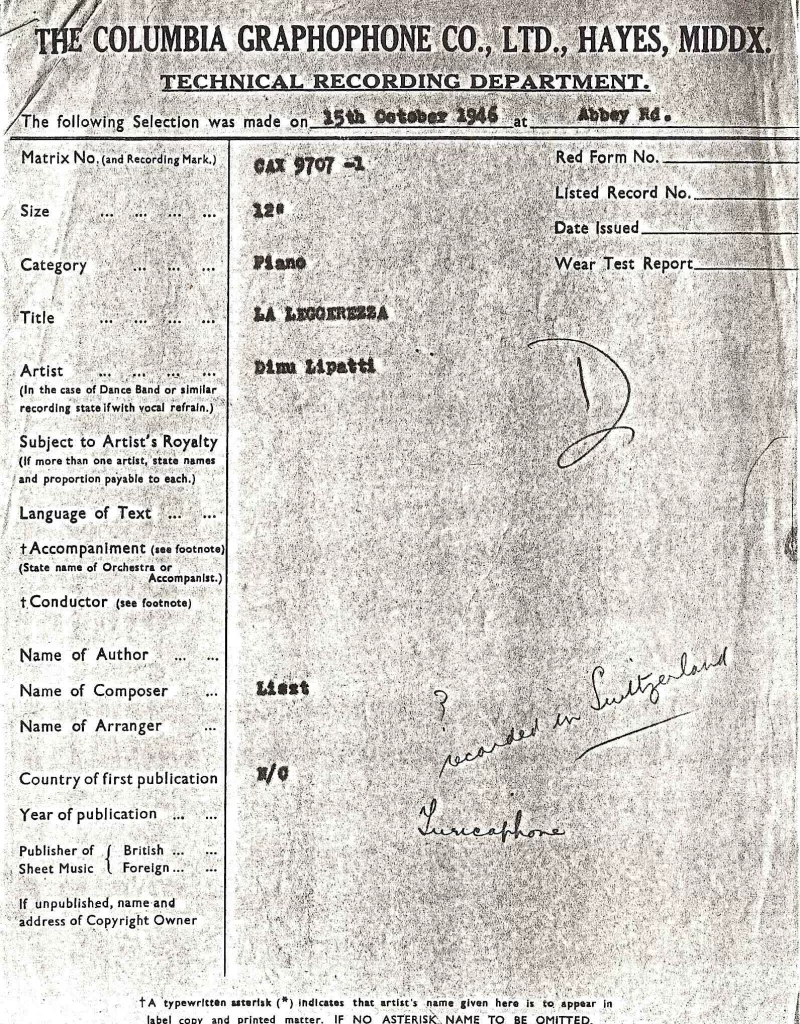
Lipatti signed his contract with Columbia in January 1946, but his first recording session did not take place until that July in Zürich, when he recorded just a few short works: Liszt’s Sonetto del Petrarca No.104 and La Leggierezza, and Chopin’s A-Flat Waltz Op.34 No.1. Unfortunately, a new material the company was using for the recording process warped in transit to London, so attempts to stamp discs that October failed. It was only starting in February 1947 that Lipatti successfully made his first Columbia discs at EMI’s Abbey Road studios.
Even then, most works were short solo pieces suitable for one or two sides of a 78rpm disc, ranging from 3 to 5 minutes per side: two Scarlatti Sonatas, the Bach-Hess Jesu, Joy of Man’s Desiring, Chopin’s D-Flat Nocturne Op.27 No.2, Liszt’s Sonetto del Petrarca No.104. The notable exception was Chopin’s B Minor Sonata Op.58, produced over two sessions in March 1947 (which later won the Grand Prix du Disque), a big-scale work that demonstrates Lipatti’s powerful playing as well as a willingness to set down longer solo pieces. The absence of further substantial compositions was not due to his perfectionism or illness, but rather to socio-economic circumstances often unrecognised: post-war material shortages and financial shortages.
Other major pianists recording at Abbey Road in 1947 and ’48 – Cortot, Schnabel, Solomon, Moiseiwitsch, and others – also recorded less at this time, mostly setting down short works suitable for a single disc, with perhaps one multi-disc solo work per year. The reason: as the broader public had less disposable income, single-disc offerings were more commercially viable, so larger pieces that would require more of a financial investment from customers were less frequently recorded at this time.
Because these other pianists produced more recordings over the course of several decades before and after this period, the limited output of their postwar sessions has been somewhat overlooked; however, these constraints coincided exactly with Lipatti’s recording debut with Columbia, and combined with Legge’s false claims, led to the inaccurate impression that he was a small-scale pianist who was reluctant to record.
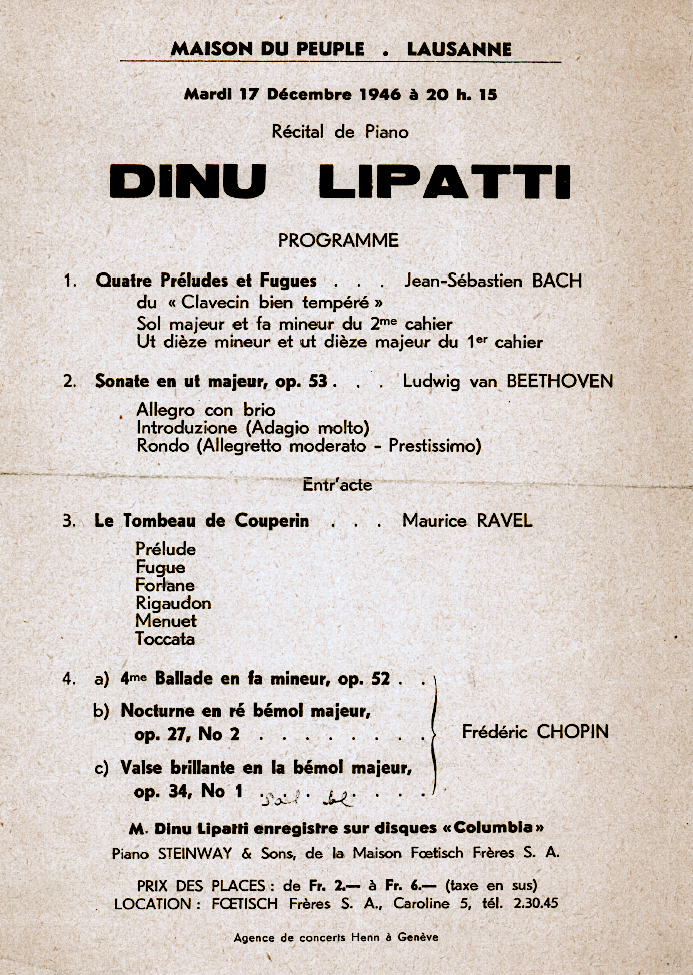
If that had been true, Lipatti would not have proposed a Beethoven Concerto, nor would he have requested – on April 21, 1948 – to record Schumann’s Études symphoniques. Legge and colleagues eagerly accepted the latter proposal as well, but this coincided with Lipatti’s last Abbey Road session and shortly thereafter his illness worsened dramatically, preventing further recordings in London. Had material and economic constraints not dictated a focus on shorter works prior to this point, Lipatti likely would surely have recorded larger-scale solo works already in his active recital repertoire at the time – the Études symphoniques, Beethoven’s Waldstein, and Ravel’s Le tombeau de Couperin – as his 1946 letter had already made clear with his statement, “I can record all that I want.” [The fact that the December 1946 programme shown here mentions that ‘Mister Dinu Lipatti records for Columbia records’ at the bottom – prior to any discs actually being released – further suggests his enthusiasm about recording.]
Repertoire Choices
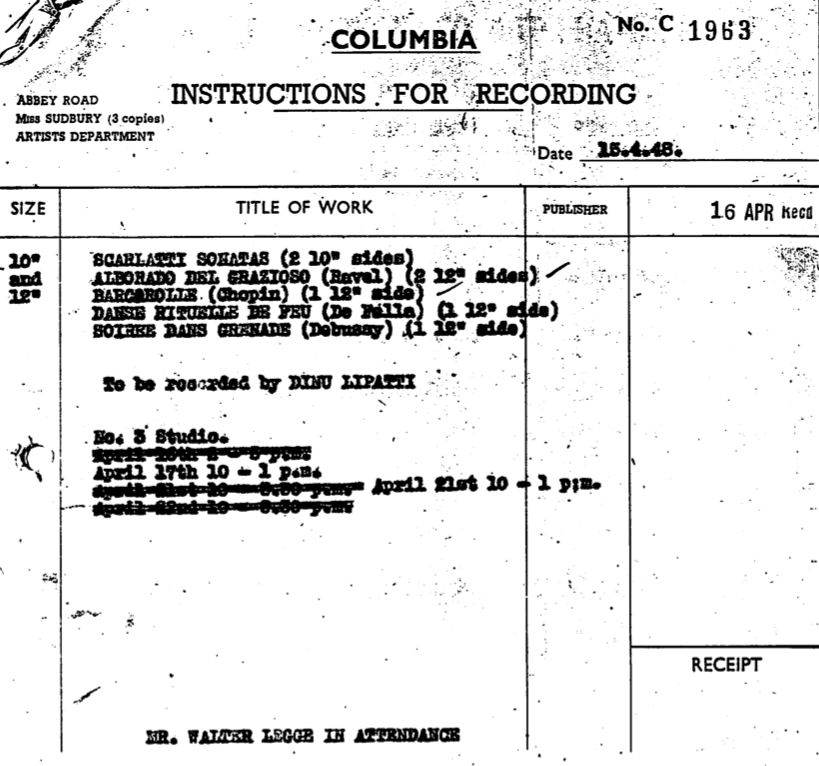
Looking back from today’s standpoint, some of the repertoire chosen for Lipatti’s shorter offerings seems unfortunate. The two Scarlatti Sonatas he recorded in 1947 are beautifully played, but these simple works do not provide a suitable opportunity to showcase his creativity. In April 1948, he recorded Chopin’s Barcarolle and Ravel’s Alborada del Gracioso – the latter perhaps his most successful and boundary-breaking disc – and an “Instructions for Recording” sheet dated that month reveals that Lipatti was also scheduled to record Debussy’s La soirée dans Grenade and Falla’s Ritual Fire Dance. Why these were not recorded is unclear – it may have been due to his worsening condition – but had these been chosen instead of the Barcarolle (since he had already recorded some Chopin works the previous year) or the more conventional Scarlatti Sonatas, our perception of his pianistic and interpretive gifts based solely on his official Columbia discography would surely have been more expansive.
It is worth noting that the Chopin Barcarolle was rejected by Lipatti – he was apparently unsatisfied by what is now considered to be the greatest recording of the work – and it was issued after he died when his widow consented to its publication; it is the only unissued solo recording by Lipatti of which master pressing plates were found in EMI’s archives after his death.
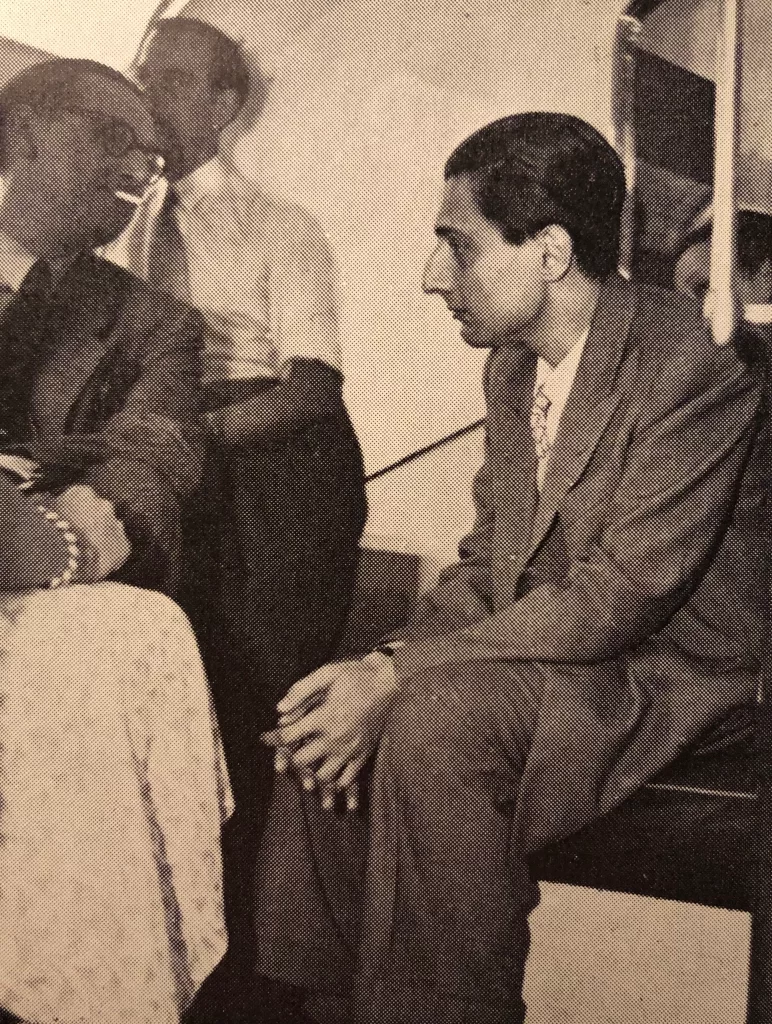
For his final solo recordings produced over the course of ten days in July 1950 – the celebrated performances of Bach, Mozart, and Chopin (the complete Waltzes and a Mazurka) – circumstances again limited the outcome. A van of recording equipment was sent to Geneva (where Lipatti lived) to record him at a rented Radio Geneva studio. The space was small, necessitating close-up microphone placement that resulted in a less aerated, more constricted piano sound, despite the excellent technical clarity of the tape recording itself. Additionally, the repertoire chosen was from his “less tiring programme” (as he himself called it), which was intended to conserve his strength during live appearances. However, Lipatti was experiencing notably increased energy levels at this time thanks to experimental cortisone injections, so he could arguably have recorded more demanding larger-scale works – the Waldstein, the Études symphoniques, and Le tombeau de Couperin – while in more robust health instead of the repertoire selected for when he was experiencing less vitality.
More details have recently emerged about these final recordings: Lipatti was apparently scheduled to record four Bach Preludes & Fugues and seven Scarlatti Sonatas at these final sessions, but in a spoken interview later that month, he joked that he had let the engineers “flee back to London” two days early to recover “so that they could recover from the ordeal to which I had subjected them” – which was likely a lighthearted deflection from the reality of his worsening condition. Additionally, it appears that there were plans to record Lipatti in the Bach-Busoni Toccata in C Major, Beethoven Waldstein Sonata, and Schumann Études symphoniques in Geneva that October, but by that time the pianist was so weak that he was unable to do so.
Lipatti’s valedictory discs of July 1950 are certainly of the highest artistic standard – “the purest gold,” as Legge justly called them – showcasing his impeccable clarity, voicing, and intelligence. However, the combination of less demanding repertoire and the constrained acoustic contributes to the impression of a pianist more controlled and delicate, somewhat lacking in strength and vigour. In fact, the difference between Lipatti’s playing at Abbey Road and in Geneva is fully discernible as we have recordings of two works made in both contexts: a 1947 performance of Chopin’s Waltz No.2 in A-Flat Major Op.34 No.1, recorded as part of the Grieg Concerto 78rpm set at Abbey Road, as well as a 1947 version of the Bach-Hess Jesu, Joy of Man’s Desiring.
The earlier Chopin is particularly revealing when compared with his 1950 account of the same Waltz in the complete cycle recorded in Geneva: while the later recording is superb, it is more quaint and restrained, whereas the earlier Abbey Road account is grand, swashbuckling, and vivacious, with richer bass resonance, bold accents, dramatic pauses, and dashing runs. Similarly, the 1947 account of the Bach-Hess – never issued on LP and appearing for the first time since the 78rpm era on a 1999 CD – also has greater resonance and sonic depth. This contrast demonstrates vividly how the technical circumstances surrounding the pianist’s final recordings can give the impression of an artist who sounds far more constrained and controlled than in his earlier performances.
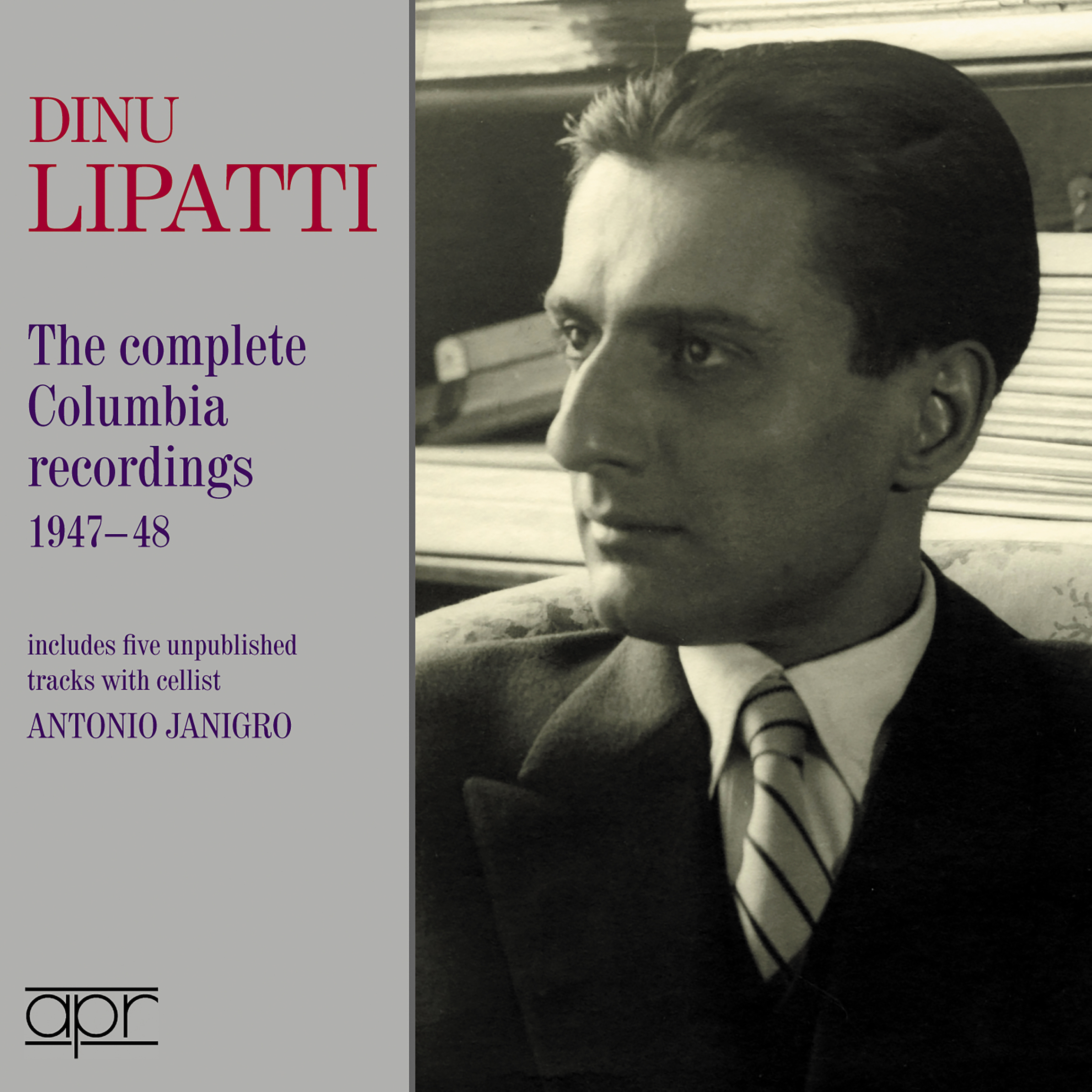
Because Lipatti recorded the complete Waltzes in 1950 – a cycle that continues to be considered the standard to which all others are compared – the earlier 1947 performance of the single Waltz has rarely been available, EMI evidently choosing not to issue what it considered to be a duplicate recording, despite the significant artistic differences in the interpretation. Likewise, the 1947 Bach-Hess was unpublished on LP (despite some album sleeves listing this take’s recording date in error) in favour of the 1950 version set down alongside other Bach works. In the UK, the Waltz appeared on LP only in 1971 and again in 1981, while its first international CD release was on APR in 1999; in the US it was published on LP only once, in a 1981 four-record box set, so most listeners across the Atlantic had no opportunity to hear it unless they had the original 78s – thus missing this vivid demonstration of Lipatti’s red-blooded vitality. Similarly, his Liszt Sonetto and Ravel Alborada – among his most powerful solo recordings – were published on LP in the US just once in 1955 prior to that 1981 box set, although they were regularly available in Europe, again resulting in limited access for North Americans to recordings that revealed Lipatti at his most vivacious.
Unofficial Solo Recordings
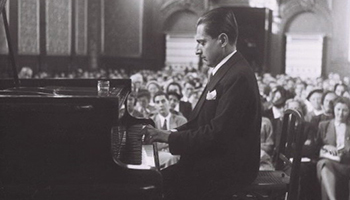
Despite his having lived at a time when tape was more increasingly being used and more radio broadcasts were being preserved, remarkably few of Lipatti’s live performances have been located – fewer than for many other celebrated pianists of his era – but what we have certainly offers greater appreciation of his art than what was available upon his death. The only complete solo recital to be found is his final concert, given at the Besançon International Music Festival on September 16, 1950 – the one in which he was too weak to play the final Chopin Waltz he had programmed (ironically the same piece that he had recorded both at Abbey Road and in Geneva). The recording is an exceptionally moving document: despite less-than-ideal sound (the microphone was placed under the Gaveau piano), Lipatti’s playing is remarkable – there are only a few uncharacteristic slips – and the emotional atmosphere of the event is palpable. Of particular interest are two Schubert Impromptus – the only works on the program he had not recorded for Columbia two months earlier – which are played with great depth and momentum. No recording of the final Bach encores (nor of his aborted attempt at the A-Flat Major Waltz) has been located, but the existing recital recording stands as a poignantly intimate testament to the end of Lipatti’s short career, though naturally not at his most vivacious.
Only two other shorter solo radio transmissions have been located and released by EMI: a 1943 broadcast of Enescu’s Third Piano Sonata and two Chopin Etudes from a February 7, 1950 Zurich concert (the same at which he played the Chopin E-Minor Concerto, discussed below). The unfamiliarity and modernity of the Enescu Sonata might make it harder for the average listener to appreciate Lipatti’s phenomenal playing, which demonstrates astonishing clarity, magical pedal effects, and outstanding rhythmic vitality; it is also unfortunate that EMI consistently issued the recording a semitone sharp. It is tantalizing to consider that Lipatti also performed Beethoven’s Waldstein Sonata at the same October 1943 Radio Bern session – no trace of that recording has been found, and it would be a discovery of exceptional significance if it were. He also performed the Waldstein on BBC Radio in London in April 1948, but that performance has also not surfaced: the official story is that the tape was erased.
The two Chopin Etudes – Op.10 No.5 and Op.25 No.5 – are truly extraordinary, particularly appreciable in a transfer of a high-fidelity tape located in 1994 and issued the following year on Archiphon, which far surpasses the lower-resolution EMI release of 1981, a version the label regrettably continues to reissue without any sonic improvements. Despite being seriously ill, Lipatti plays with stunning dexterity, exquisite tonal colours, and the musical intelligence that is a key hallmark of his pianism.
Beyond the Mainstream
In recent decades, a number of solo broadcast and test recordings have surfaced that reveal Lipatti’s repertoire was broader than commonly believed; regrettably, these have not been officially issued by EMI and have therefore not been not widely distributed and heard by the legions of Lipatti admirers around the world. Despite their inferior sound quality, these recordings capture him playing with far more fire and overt virtuosity than is heard in much of his Columbia studio output.
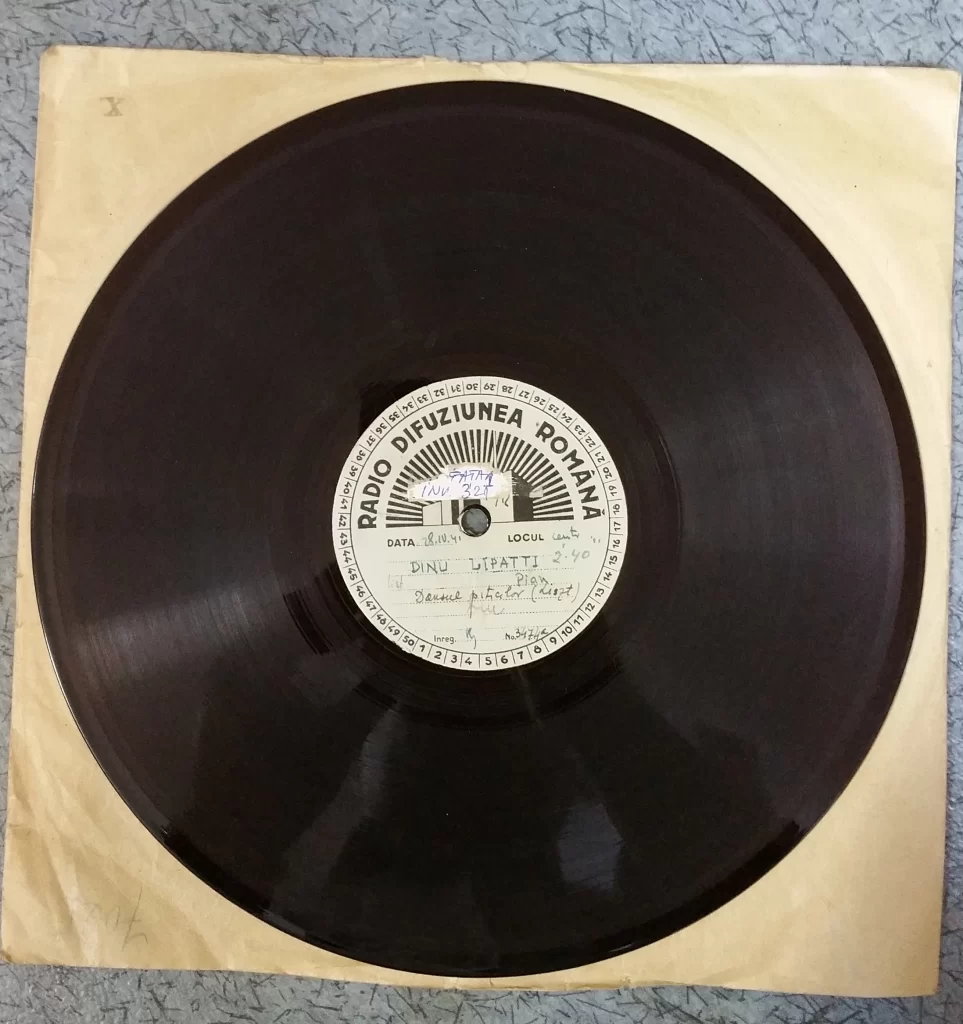
A few privately made recordings of works by Bach, Brahms, and Enescu from Paris in 1936, though faded, demonstrate that at age 19 he was already a vivacious and highly intelligent musician, as Cortot recognised. Romanian radio recordings from 1941 are even more illuminating: a dazzling, adventurous traversal of Liszt’s Gnomenreigen showcases Lipatti’s incredible virtuosity and impetuousness (listen here), while several Brahms Intermezzi are notable for their impeccable voicing and creative nuancing, highlighting his deep musical understanding of this composer’s idiom. One work from a 1947 BBC broadcast in which he played several pieces has also been found – Liszt’s La Leggierezza, which he never rerecorded for Columbia after his 1946 attempt: this glistening and robust interpretation further confirms his forthright, musically-focused virtuosity while underscoring his extraordinary affinity with Liszt’s music (listen here).
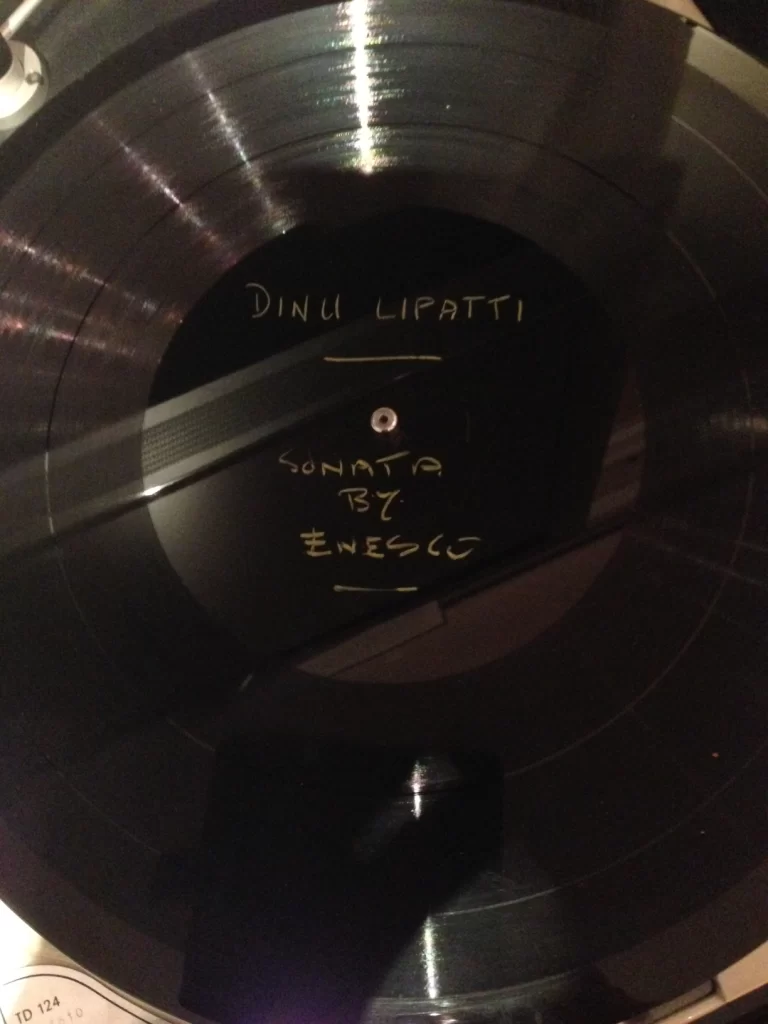
Among the most significant discoveries is a set of private recordings made around 1945, located in 2008 and issued by Marston Records in 2017 (click here). The discs, labeled in Lipatti’s own hand, had been held by an American collector who refused to transfer them: they were only obtained after he died, which illustrates the mania that many collectors have around Lipatti and which suggests that other such treasures may still be in private hands. It is most fortunate that these were eventually recovered (although sadly some discs had deteriorated beyond repair – about fifteen minutes’ worth could be salvaged), as they offer some of the finest surviving examples of Lipatti’s pianism.
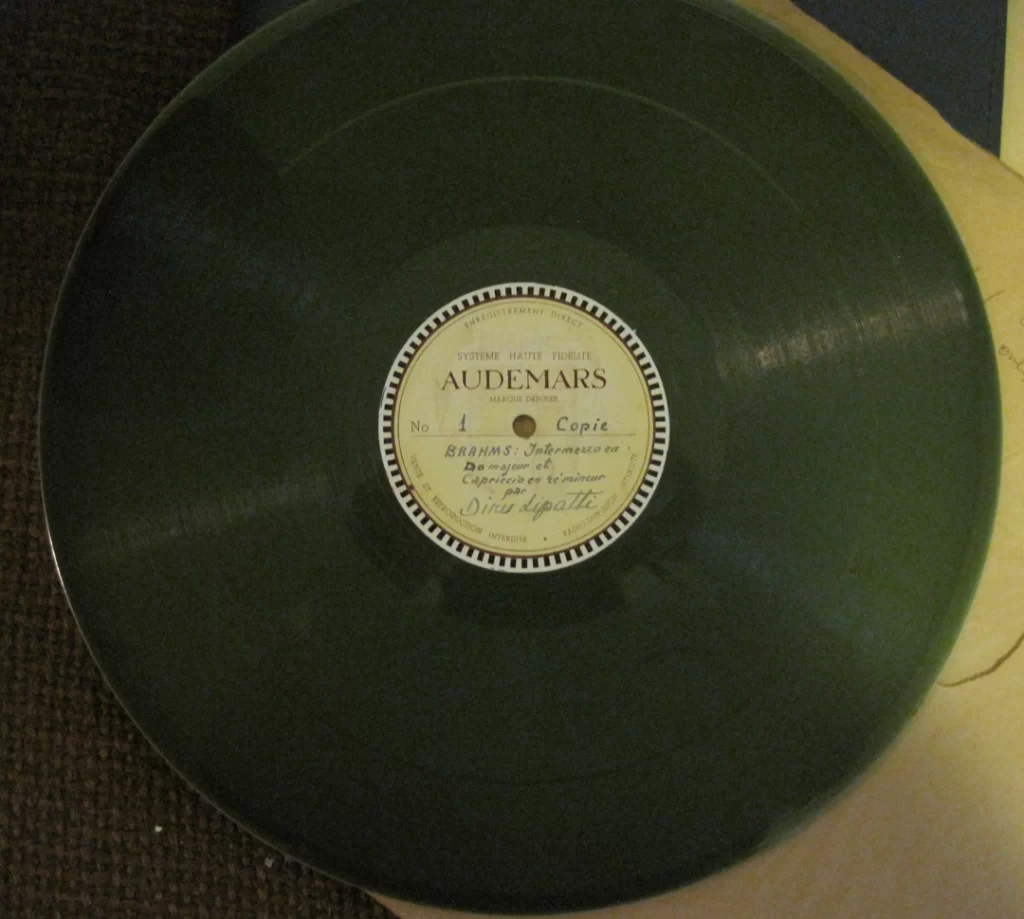
The Scarlatti Sonata in G Minor K.450, for instance, features sublime voicing and rhythmic buoyancy, far more striking than the two Scarlatti Sonatas he recorded at Abbey Road: if his commercial output had included this work, his official discography would already have been significantly more impressive. Perhaps most astounding are Brahms’ Intermezzo Op.119 No.3 and Capriccio Op.116 No.7, performed with majestic sweep, impeccably crafted melodic lines, idiomatic timing, and dramatic bursts of energy, showcasing Lipatti’s interpretative mastery and providing a vivid reminder of the degree to which Lipatti’s power would fade in his final years, whilst also making the absence of solo Brahms from his commercial recordings most regrettable (that said, his oft-issued selection of four-hands Waltzes with Nadia Boulanger for HMV in 1937 is a treasure).
Lipatti with Orchestra
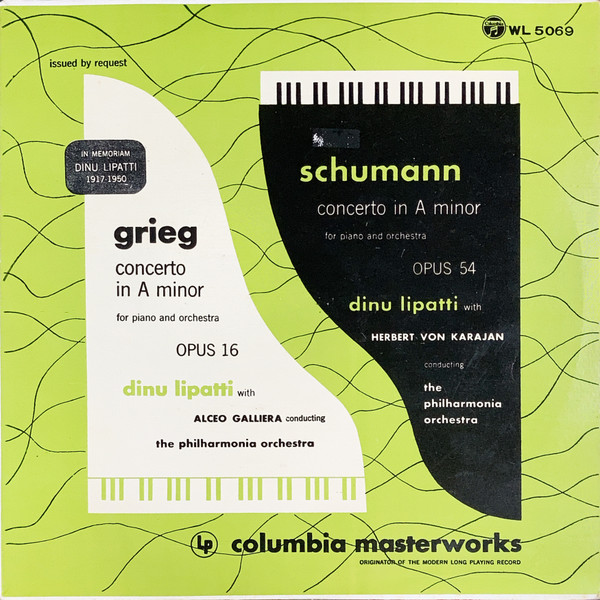
Lipatti’s concerto recordings showcase his musical talents to full advantage, and the discovery of several live performances of Lipatti with orchestra have significantly expanded his discography. He recorded only two concertos for Columbia: the Grieg in September 1947, followed by the Schumann in April 1948, which met with even greater acclaim after the enormous success of the former. It is worth noting that Lipatti had not performed the Schumann publicly when, soon after the Grieg sessions, he was asked to record it; having prepared it in 1945, he agreed to the recording on roughly six months’ notice – another documented contradiction to Legge’s claims that the pianist needed extensive preparation time. Both his Grieg and Schumann performances are absolutely superb, and thanks to the phenomenal Steinway No. 299 at Abbey Road and EMI’s expert engineers, they reveal Lipatti’s remarkable power as well as his exceptional subtlety and refinement: the first movement cadenza of the Grieg is one of the most captivating examples of his fusion of strength and sensitivity.
Over time, these two 19th-century composers’ sole concertos, both in A Minor, became a standard repertoire pairing on LPs. Lipatti’s recordings – originally on 78s and first issued together on LP in the 1950s – represent his sole studio concerto output; however, because so many pianists would later record the same combination, EMI’s selections – chosen because they were not in the Columbia catalogue at the time – make Lipatti appear somewhat more conventional and less remarkable. Nevertheless, his interpretations truly are sensational (the Schumann has widely been considered a reference recording), both readings brimming over with power, refinement, and tonal brilliance. Unfortunately, the lower-quality remastering and pressings of most North American LP issues limited the apprehension of Lipatti’s dynamic range and sound world which were more fully evident in European reissues.
Non-Commercial Concerto Performances
In the decades following Lipatti’s death, numerous off-the-air concerto recordings have surfaced, though far fewer than could be expected during this epoch, and these dramatically broadened our perception of his artistry. Legge’s misleading claims about the time Lipatti required to prepare concerto repertoire obscured the fact that the pianist had publicly performed twenty-three works for piano and orchestra – not including additional private repertoire – ranging from Bach concertos to Stravinsky’s Capriccio and Bartók’s Third Concerto (whose Swiss premiere Lipatti gave in 1947). Any addition to his discography beyond the Schumann and Grieg concertos has been most welcome, as glorious as the two official studio concerto recordings are.
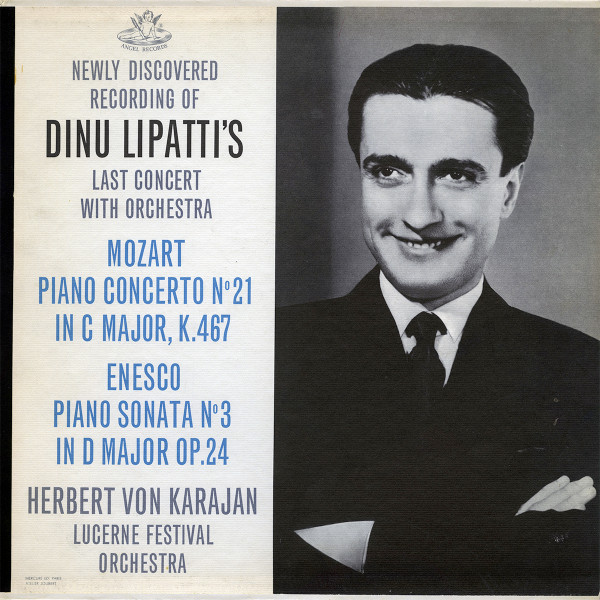
The earliest discovery was Lipatti’s final appearance with orchestra, his August 23, 1950 Lucerne Music Festival performance of Mozart’s Piano Concerto No.21, with his own cadenzas. This is a truly astounding interpretation and despite his deteriorating health at the time, Lipatti plays with tremendous brio and charm, his first movement cadenza in particular fusing remarkable emotional depth and joyful exuberance while highlighting the operatic nature of Mozart’s melodic content. The radio tape had been erased from Swiss radio archives but two off-the-air copies were located in 1959; the performance was issued in 1961 and has since been a justly celebrated mainstay in the catalogue and an important part of Lipatti’s discography. (Incidentally, Legge’s claim that Artur Schnabel was present for both the rehearsal and performance, showing up in concert attire case he needed to step in for the ailing Lipatti, is an outright fabrication: Schnabel’s family has confirmed that he was not in Lucerne at the time.)
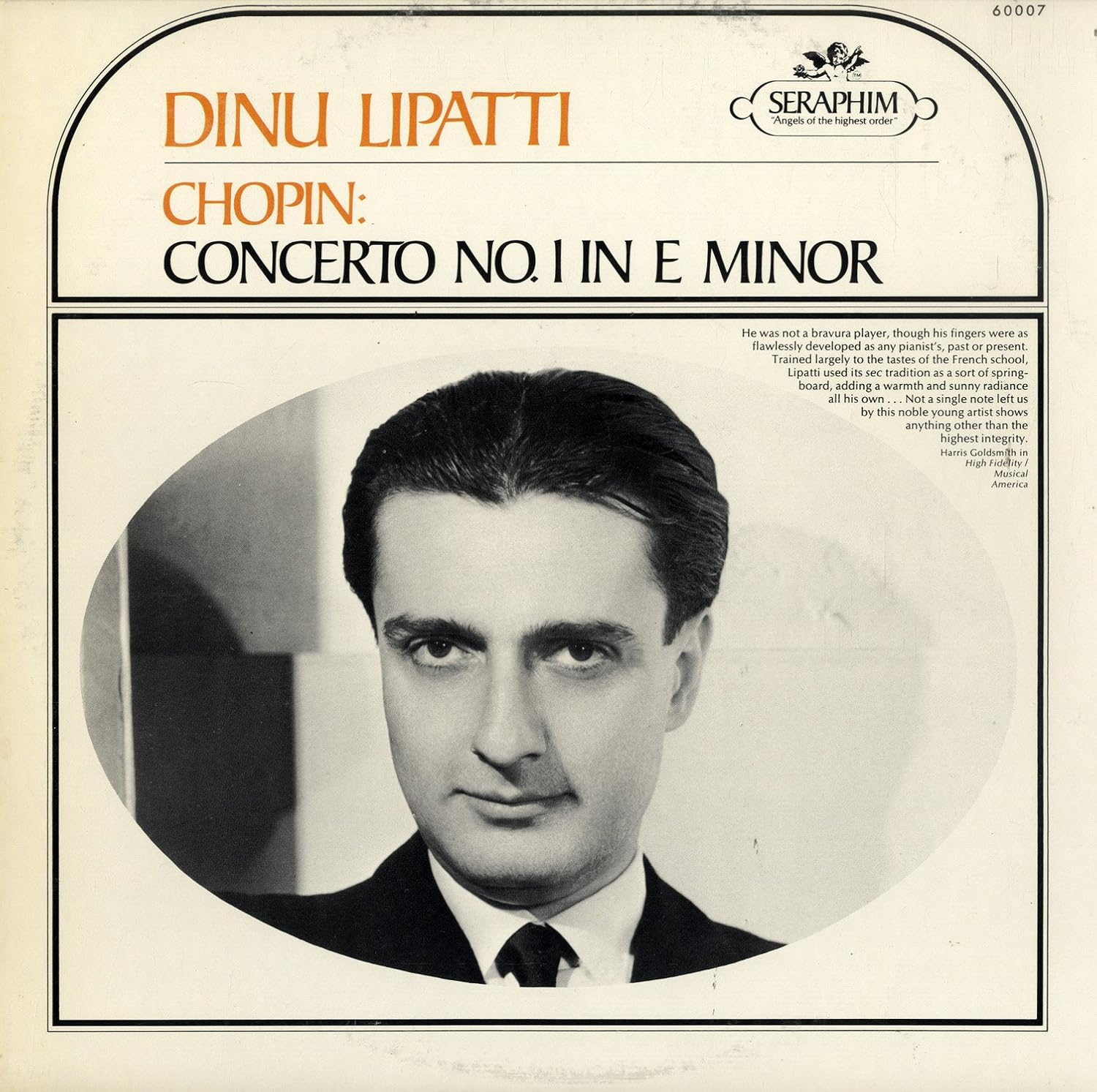
A 1966 release of Chopin’s E Minor Concerto was revealed in 1981 to feature a recording not by Lipatti but by Polish pianist Halina Czerny-Stefanska. This error was a result of multiple oversights by EMI and was not deliberate, and as fine a pianist as Czerny-Stefanska was, her playing lacked the strength and power of Lipatti’s: although this led some well-trained listeners to doubt that the tape was authentic, EMI officials ignored those observations. An authentic recording of Lipatti’s February 7, 1950 Zürich performance was offered to EMI once the mistake was identified, and although it suffers from poor sound, it showcases arresting pianism; later remastering by the German label Archiphon better reveals the power and nuancing of Lipatti’s performance, yet EMI declined offers to use the improved tape and their older substandard transfer continues to circulate officially.
A radio broadcast of a February 22, 1950 Geneva performance of the Schumann Concerto – two years after his studio version was made – remained in Swiss archives until it was issued by Decca in 1970: EMI was aware it existed but chose not to release it because Lipatti had already recorded this concerto for them and contractual complications would arise from publishing a performance with the Orchestre de la Suisse Romande under Ernest Ansermet, both of whom were signed to Decca. Lipatti was very ill at this performance – Ansermet stated in an interview that they weren’t sure that the pianist would make it to the end of the work – and it is certainly a more emotionally probing account than the more upbeat studio recording of two years earlier (Lipatti indicated in a letter that he felt the ‘super-classical’ Karajan’s tempi had held back his more emotional inclinations). It is rather unfortunate that this moving performance is less known due to its only occasional release on Decca rather than as part of Lipatti’s regularly republished ‘official’ discography on EMI.
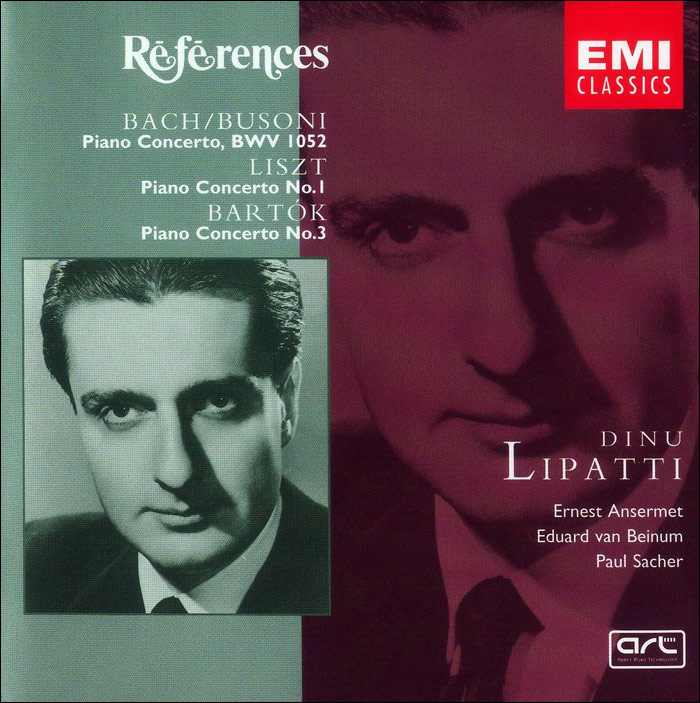
Among the most wide-ranging and significant releases of Lipatti concerto recordings are three live performances spanning three musical epochs of repertoire completely new to Lipatti’s discography and surprising to some who were unaware of the pianist’s range: Bach’s Concerto in D Minor (with selected Busoni variants), Liszt’s Concerto No.1 in E-Flat Major, and Bartók’s Third Concerto. All were issued on different small labels – the latter two located and first published as a result of my research – prior to EMI’s eventual decision to release them together on a single CD, at my suggestion, for the 50th anniversary of Lipatti’s death (I had proposed the same grouping a decade earlier). Each of these three recordings reveals fascinating aspects of his pianistic and interpretative genius.
Perhaps the most surprising is Lipatti’s October 2, 1947 performance of Bach’s D Minor Concerto BWV 1052, in which he incorporates textual emendations from the Busoni edition. Known for his unparalleled precision and respect for the score, Lipatti here embraces some of Busoni’s unconventional changes to make full use of the modern piano’s range and dynamics. This bold, adventurous approach illustrates an idea he wrote in preparatory notes for a master class that he was due to teach with Nadia Boulanger in the Spring of 1951: “True and great music transcends its time and never corresponded to the framework, forms, and rules in place at the time of its creation.” A particularly mesmerizing decrescendo in the first movement brings Amsterdam’s Concertgebouw audience to an awed silence, a nuance that perfectly fits the score yet is impossible to achieve on the keyboards available during Bach’s lifetime.
His June 6, 1947 Geneva account of the Liszt E-Flat Major Concerto, though hampered by noisy, deteriorated acetate discs, is a powerful yet spacious reading, drawing inspiration from Liszt pupil Emil von Sauer, whom Lipatti had heard play this work in Paris in the late 1930s. The pianist employs broad tempi in lyrical passages but also bold bursts of intensity that challenge the prevailing perception of his playing as more demure and controlled. With this performance and the posthumously-discovered Gnomenreigen and La Leggierezza, we now have roughly 30 minutes of Lipatti performing Liszt, compared with the mere six minutes he officially recorded for Columbia.
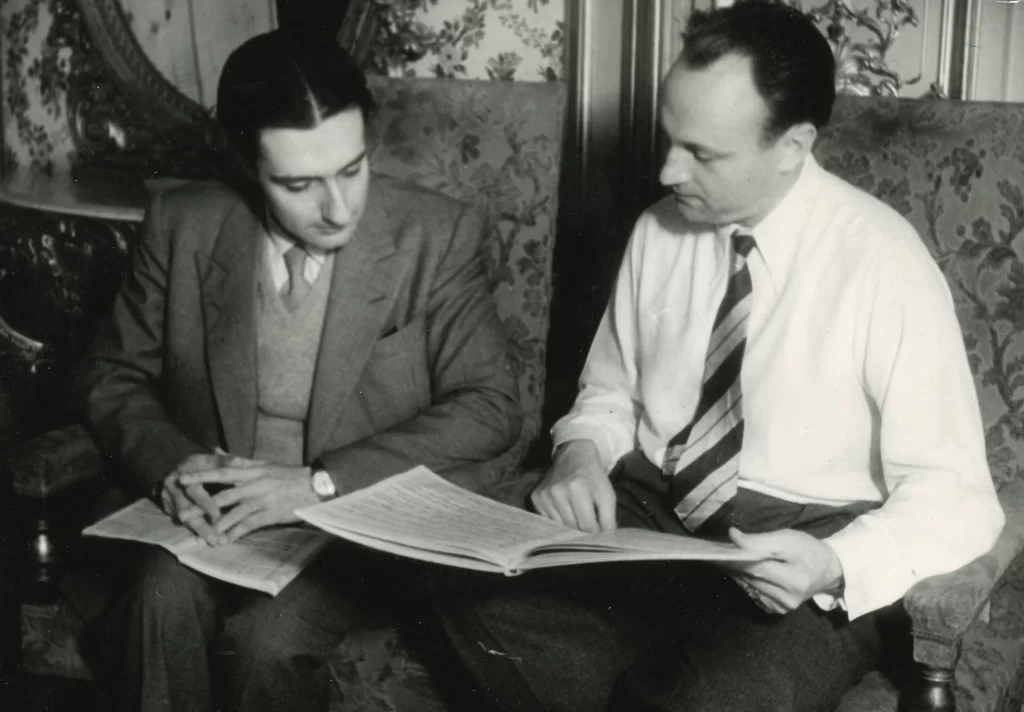
Finally, the Bartók Third Concerto underscores Lipatti’s affinity for 20th-century music, echoing his playing in Enescu’s Third Sonata and the 1943 Romanian recordings of two of Enescu’s violin sonatas with the composer. Although he was more ill by this May 30, 1948 performance in Baden-Baden – his last public appearance for several months – his playing is magnificent, marked by extraordinary clarity and tonal beauty. Lipatti had been due to perform and record the work with Karajan in late 1949 but he was too ill to travel to London, and a suggestion to record it in Switzerland around this time was rejected by Legge (yet another occasion on which the producer did not, as is generally believed, do all that he could to record Lipatti). Although this broadcast recording had been first obtained by Legge and Madeleine Lipatti in 1964, for reasons ranging from technical faults with the tape to contractual complications and conductor Paul Sacher’s dissatisfaction with the performance, it was not officially issued until I intervened nearly four decades later.
Two more broadcasts of less familiar repertoire have also been located: the October 10, 1945 world premiere performance of Lipatti’s own Danses roumaines in Geneva and a recording of his own Concertino in Classical Style from the same May 30, 1948 concert as the Bartók. Despite these works’ unfamiliarity and less broad appeal, these are important documents that capture Lipatti playing his own compositions in concert.
Further concerto performances by Lipatti may yet come to light. Known performances that could some day appear are two Bach double-keyboard concertos with Wilhelm Backhaus in 1946, the Chopin Andante Spianato & Polonaise that was played at the same 1947 Geneva concert that produced the Liszt Concerto, Mozart’s D Minor Concerto K.466 (with Beethoven’s cadenzas) conducted by Hindemith at the 1947 Lucerne Festival (from which other live recordings have been found), and the Ravel G Major Concerto from the same Amsterdam concert as his Bach D Minor. Even without such finds, the number of issued concerto recordings has already more than tripled what he set down in the studio, and it is not inconceivable that more treasures may yet be waiting to be found.
Lipatti Recorded Beethoven – For Legge
Given Legge’s misleading claim that Lipatti hardly played any Beethoven – and the enduring notion (implied by Legge himself) that he did everything possible to preserve the pianist’s legacy – one set of recordings that surfaced only six decades after Lipatti’s death is especially important: 25 minutes of chamber music performances with the cellist Antonio Janigro.
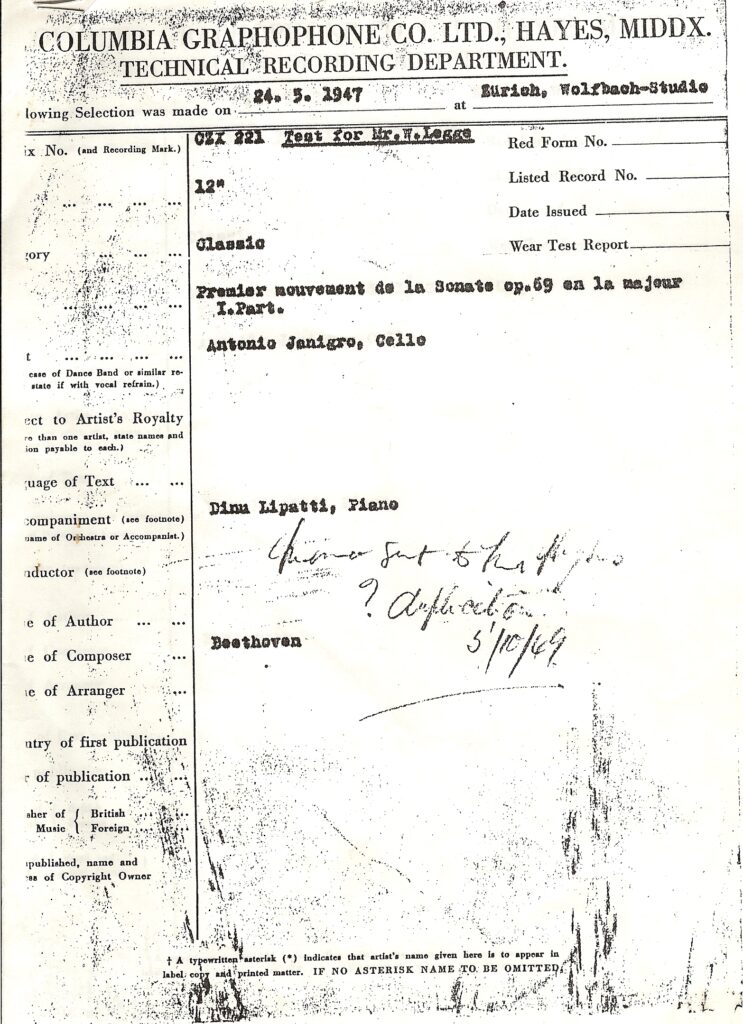
In May 1947, Lipatti and Janigro toured Switzerland performing sonatas by Bach, Beethoven, and Brahms, giving concerts that received rapturous reviews. On May 24, they recorded six 78rpm discs at Zürich’s Wolfbach Studio, including the first movement of Beethoven’s A Major Sonata Op. 69. At the top of each page of the session sheets are the underlined words Test for Mr. W. Legge.
No documentation in EMI’s archives explains how this session came about, but given the scarcity of Lipatti recordings – and the complete absence of him in both Beethoven and the mainstream chamber repertoire – it is utterly mystifying why Legge would choose not to issue these discs. One possible explanation comes from cellist Steven Isserlis, who studied with Janigro in the mid-1970s: the elder cellist, speaking mournfully of the lost chance to record with Lipatti, exclaimed to his student with a bitter tone, “Mister Walter Legge did not like the cello.”
Whether or not that was the reason, it certainly cannot excuse Legge having kept the discs in his private collection without releasing them during his lifetime. The playing of both artists is exquisite throughout, and naturally any recording of Lipatti playing Beethoven is of immense artistic and historical value. Some years after Legge’s death, his test pressings were ostensibly ‘borrowed’ from his widow Elisabeth Schwarzkopf – along with other rare recordings – by someone who promised to transfer them, but they were never returned, and that set of discs remained unobtainable. I eventually tracked down other copies in the hands of Janigro’s pupil and biographer Ulrich Bracher, who graciously provided them for transfer by the Archiphon label’s producer Werner Unger. They are now available on CD on the APR label, alongside transfers of Lipatti’s complete solo and concerto Abbey Road recordings that are far superior than the substandard versions issued by Warner (which absorbed EMI). [You can read more of the backstory into the Lipatti-Janigro recordings and my rediscovery of them – and hear the recording – by clicking here.]
Early Recordings of Romanian Repertoire
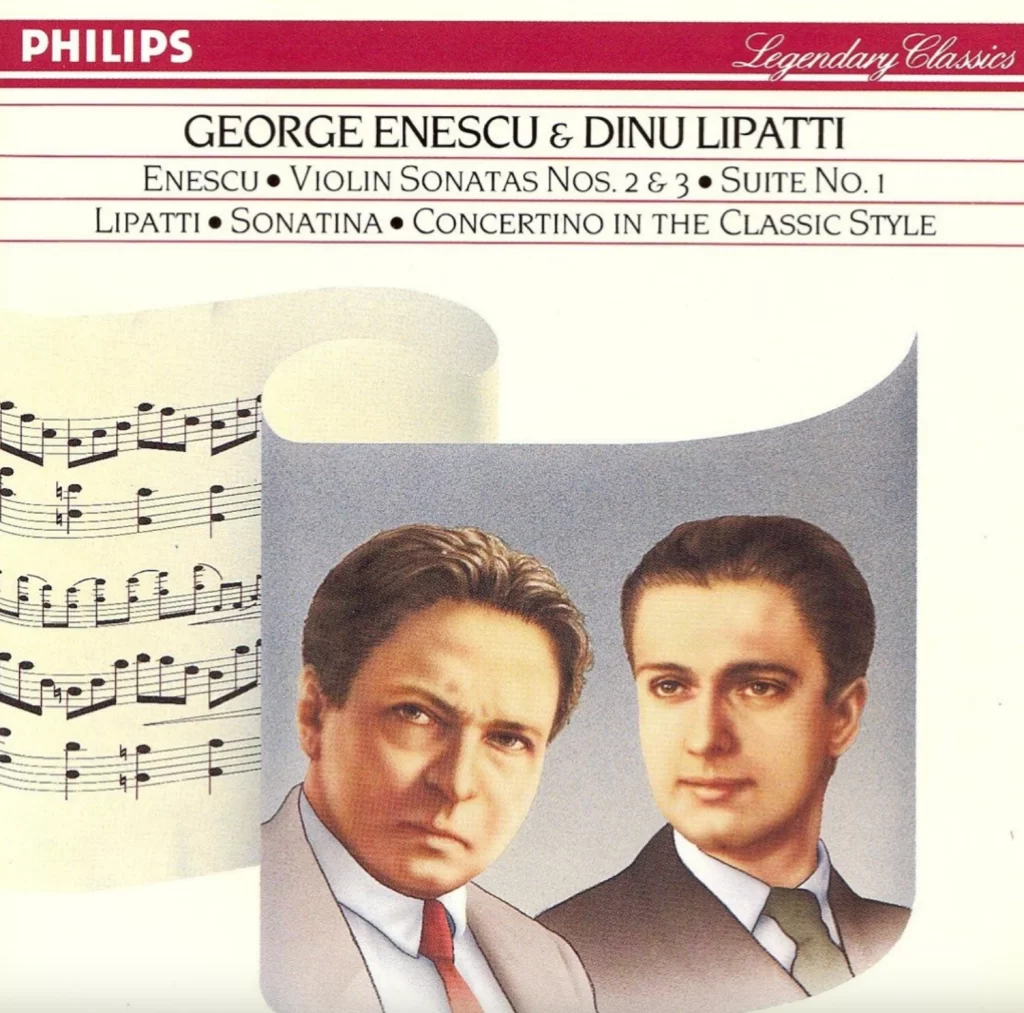
A less widely known set of Lipatti’s recordings were made in Berlin and Bucharest in early 1943 for the Romanian label Discoteca and later published on domestic Electrocord LPs; these were never picked up by EMI, likely due to the obscurity of the repertoire. In Berlin he recorded his own Concertino in Classical Style for piano and chamber orchestra, while in Bucharest he recorded his Sonatina for Left Hand, a movement from an Enescu suite, and Enescu’s 2nd and 3rd Violin Sonatas with the composer himself as violinist. These performances showcase Lipatti’s deft articulation and rhythmic vitality in his own works, and truly miraculous tonal colours and mastery of the pedal in his collaborations with Enescu. These all remained largely unavailable in the West until one Violin Sonata appeared on the Monitor label in 1961, and then all were included on Musical Heritage Society LPs in 1976 before a 1990 Philips CD set finally made them more widely accessible. Even today, these recordings remain some of Lipatti’s least known, offering a vivid glimpse into his interpretative gifts.
The Continuing Revelation of Lipatti
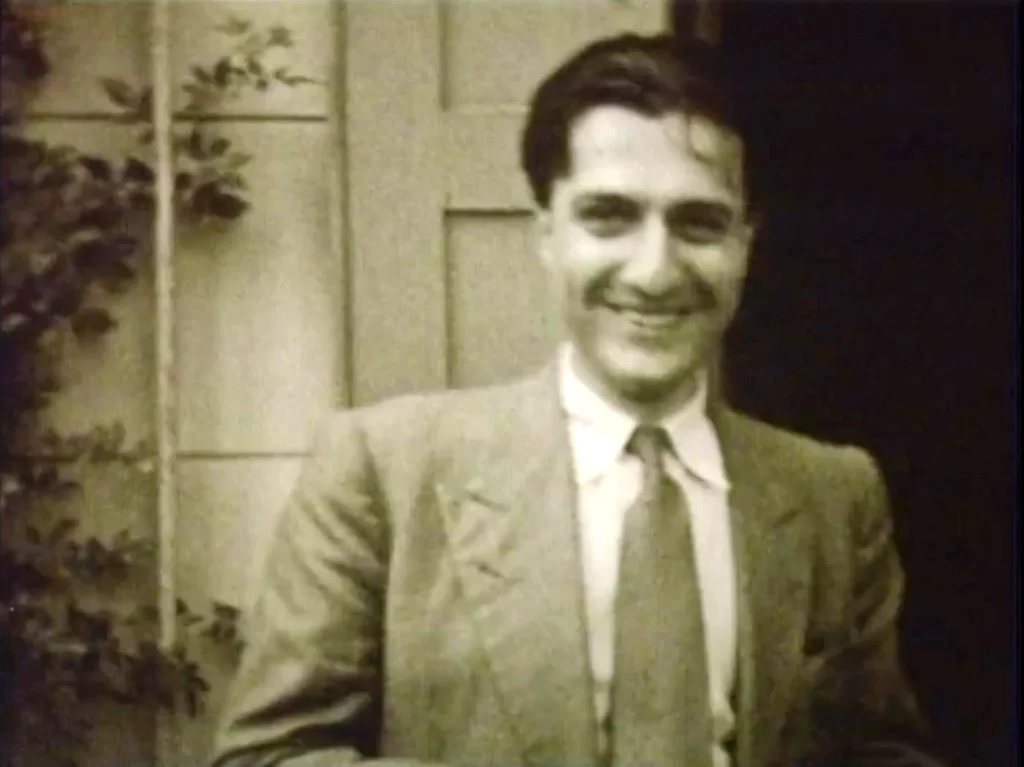
The way we perceive Dinu Lipatti’s artistry has changed dramatically over the past seventy-five years. Many more recordings are now accessible at the click of a button, showcasing his musical gifts far more fully than what was available when he died. Previously private documents reveal that the long-held image of Lipatti as a perfectionist reluctant to record was grossly misleading: he was in fact a forward-thinking artist who wished to produce a substantial discography, yet his plans were thwarted by mismanagement, socio-economic conditions, and bad luck. Alongside these musical and biographical discoveries, far more photographs and a few seconds of silent film footage have surfaced (learn more and watch here), showing Lipatti with his hair less immaculately held in place and with a beaming smile, revealing more of true character and spirit.
We can hope that even more recordings, documents, images – and perhaps some sound film – will emerge, allowing us to experience an ever fuller picture of Lipatti’s genius. In spite of the inaccuracies perpetuated by Walter Legge, the producer articulated something essential when he wrote, “God lent the world His chosen instrument whom we called Dinu Lipatti for too short a space.” And as Lipatti himself said, “true and great music transcends its time” – and fortunately, so too does the artistry of Dinu Lipatti.
– Mark Ainley © 2025