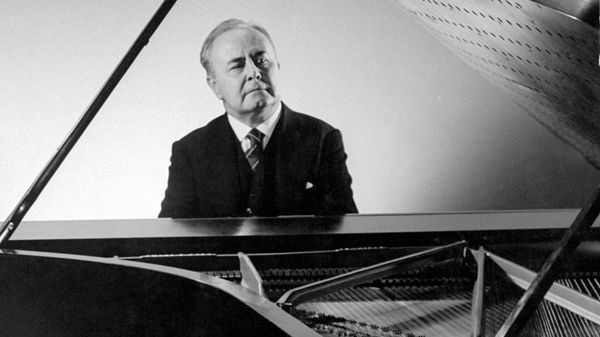
The legendary Polish pianist Josef Hofmann (Józef Kazimierz Hofmann) was born January 20, 1876, making 2026 the 150th anniversary of his birth. Hofmann was one of the most fascinating pianists in recorded history, not only for his incredibly personal approach to playing and interpretation but for the unique nature of recorded legacy.
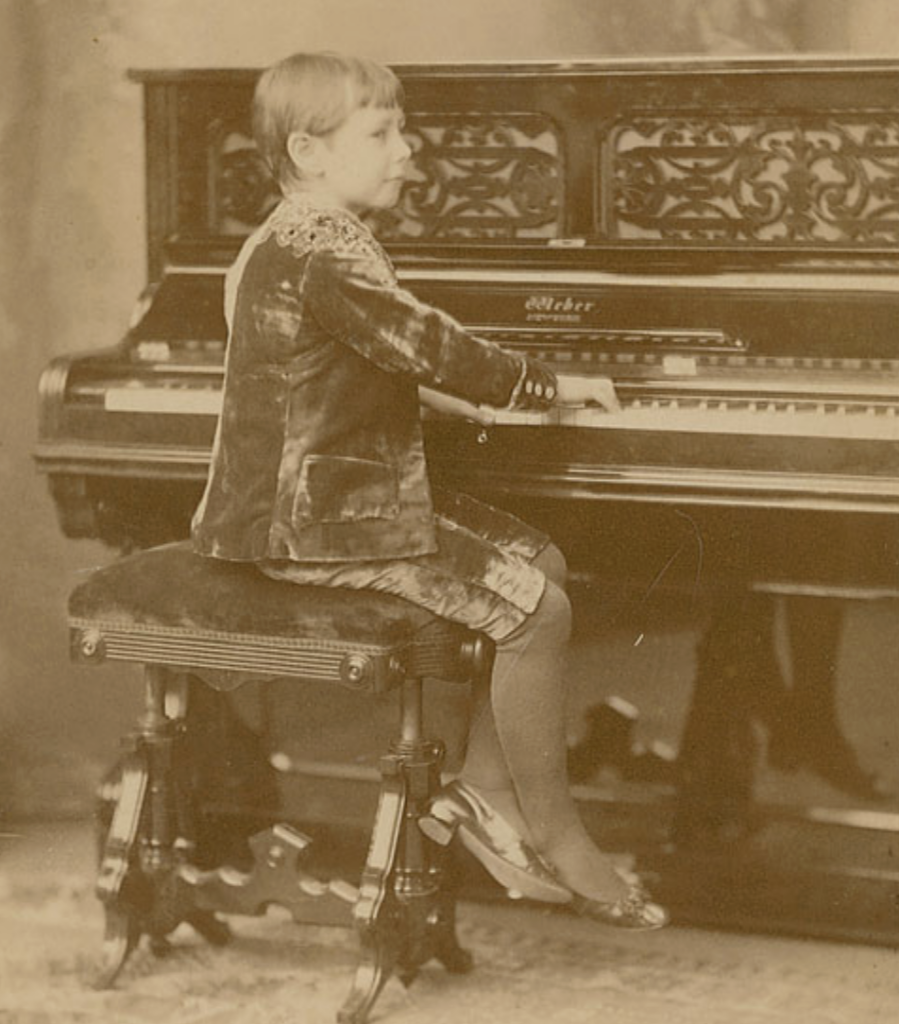
Hofmann was a child prodigy who became a pupil of the legendary Anton Rubinstein, one of the most formidable of all pianists (Rachmaninoff considered him to be a major influence). Hofmann’s playing from a young age was so remarkable that he was touring and performing extensively at far too young an age – his Warsaw debut took place when he was five – and soon after his legendary 1887 debut at the Metropolitan Opera House in New York at the age of 11, the Society for the Prevention of Cruelty to Children got involved: funding was secured to balance out the fees incurred by canceling the contract of his tour (Alfred Corning Clark donated $50,000 to do so) and he was then barred from performing in public until he was 18, thus being able to focus on his training with the great Rubinstein. He would then go on to have a half-century-long performing career around the world, settling in the US while still touring internationally.
With his life spanning the invention of recording cylinders through to the advent of tape recording and the long-playing record (LP), Hofmann himself had a fascinating relationship with sound preservation, yet his ample discography is quite unique in several respects and requires a lot of contextual consideration as regards the technology, his relationship with preserved performances, his style of playing in the studio and in concert, and biographical circumstances at various phases of his career.
That we have so many recordings in so many forms of such a phenomenal artist is fortuitous, not least because he officially stopped producing commercial recordings in 1923 – all of these being of shorter works; however, unofficial broadcast and private recordings of recital and concerto performances exist that greatly enhance our appreciation of his artistry. It is thanks to the sixty-plus years of work by Gregor Benko that we have access to so much of Hofmann’s playing both preserved and accessible, both rare recordings from the dawn of the evolving technology through to private and privately-held performances that at times existed in a single copy. All of these are now readily available thanks to his work together with Ward Marston, the first four volumes being issued on the VAI label (click here) and the remaining five on Marston’s own label (click here) – all those interested in great piano playing would do well to have all of these extraordinary releases in their personal collection.
A Unique Interpreter
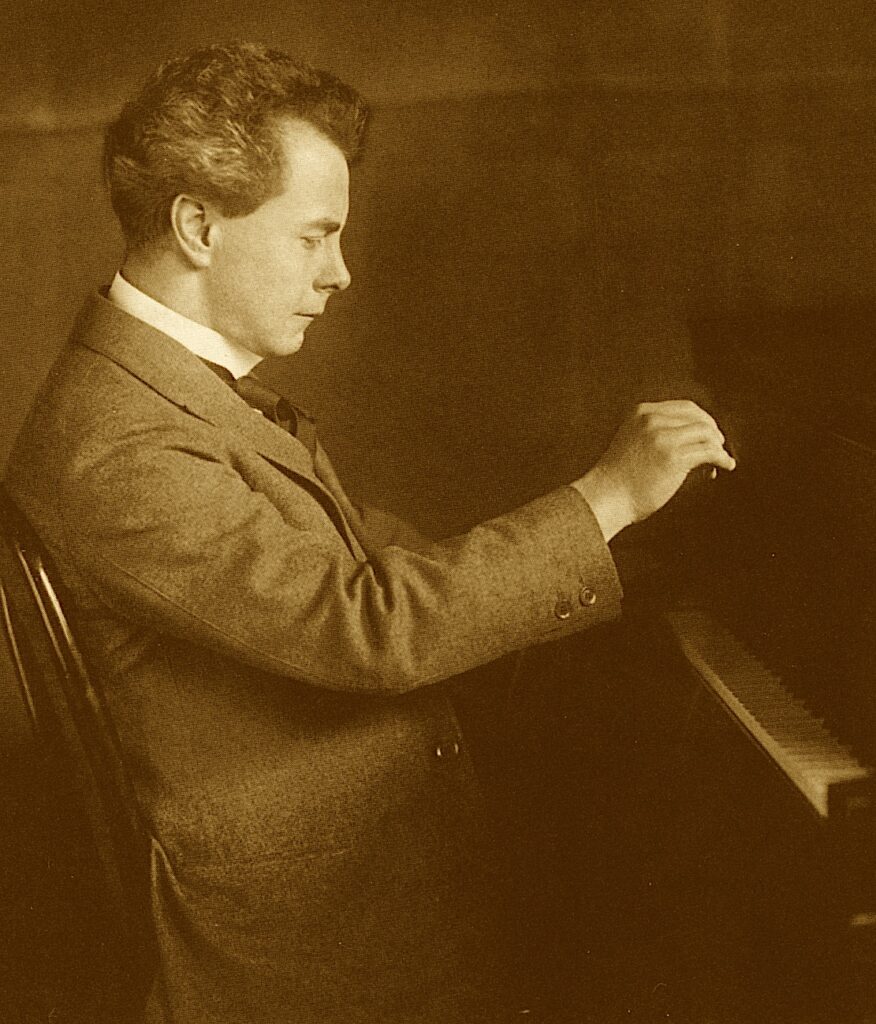
Like many of the pianists of his time, Hofmann had a very personal style of playing, with an instantly-recognizable tone and many characteristics that mark his interpretations across the decades. His articulation was incredibly even and precise, his voicing of primary and secondary lines unparalleled (singing lines seemed to soar above everything else), his pedal effects were ravishing, his timing impeccably clear with any adjustments allied with the structure of the music. While some of his playing seems so radical to modern ears as to seem extraordinarily personal, this is not how his pianism was perceived at the time. In the late 19th and early 20th centuries, artists were expected have an individual approach to performing, and some pianists employed quite a bit of freedom in their interpretations – audiences did not expect an impersonal approach.
Hofmann, however, was seen in his day as a more modern pianist, one whose style was more objective and less personal – less overtly emotionally demonstrative. Especially when listening to his earlier recordings, one could almost take dictation from his playing and end up with a nearly exact replica of the score. This led some listeners at the time to find him quite ‘cold’ (the son of a Berlin-based pianist from the ’20s told me that in that major centre at the time, many said his playing was ‘as cold as a dog’s nose’), yet there is a warmth to his sound and incredible life in his finest playing, and his interpretations are musically truthful and astute.
There is the reality that having played since an incredibly young age and not having had a normal childhood, Hofmann might have had a different relationship with music-making in his adult years than did others: after his training, he apparently did not like to practice, writing in 1924 that “I like to play the piano sometimes. I shall be glad when I am not compelled to do so.” One astute listener I know said upon listening to him, “He sounds as though he played the piano because that’s what he always did, but he didn’t really love to do so” – something aligned with the quote above and that can be sensed in some of his later performances. Even taking all of this into account, Hofmann’s music-making is still absolutely extraordinary, both interpretatively and pianistically, and it is of the greatest importance when exploring the piano and musical interpretation.
The Dawn of Recording
The young Josef (called Jozio at the time) at the age of 11 in 1887 is said to have sat on the lap of the inventor of cylinder recording, Thomas Edison, and recorded a piece at the piano – apparently the first recording of a classical musician – but if this cylinder was actually made, there is no trace of it. However, in recent years some cylinders recorded in Moscow by Joseph Block were located (released on Marston Records – click here) and these capture the earliest known recordings of Hofmann in late 1895 and early 1896.
Here he is on February 10, 1896 – a few weeks after his 20th birthday – playing (after a spoken introduction) part of Louis Brassin’s arrangement of Wagner’s Magic Fire Music from Die Walküre. The cylinder runs out before he finishes the piece, but this is a fascinating performance: he would later record the work for Brunswick in 1923, at which time it was unfortunately abbreviated to fit on one side of a 78rpm disc, so the official recording lacks the opening section that is featured on this cylinder, which makes it all the more fascinating to hear this earlier version – in addition to the fact that we hear Hofmann at such an early time in his career.
Even with the incredibly faded sound, Hofmann’s playing is captured with extraordinary clarity: we can hear his crystal-clear articulation, delineation of primary melodic lines, and even with the constricted sonic range of the recording, his exquisite palette of tonal colours.
Hofmann’s Commercial Recordings
Hofmann began to produce commercial recordings with the Gramophone & Typewriter Company in November 1903, setting down five works that, like all of his official discs, demonstrate extraordinarily clear articulation, iron-clad rhythm, and miraculously delineated voices, despite the evident sonic limitations. Even in a work that is both intense and lyrical like the Schubert-Liszt Der Erlkönig, we hear incredible consistency of his dynamic range, layered voicing (in particular his patented soaring singing line), rich tonal colour, and, of course, an extraordinarily intelligently conceived interpretation.
Hofmann’s second set of studio discs was for the Columbia label, for whom he produced 33 pieces of music in 17 sessions between 1912 and 1918 – and for which he was not particularly well paid ($1500 in total). Among the many remarkable performances here are a work almost never heard today, Sternberg’s Concert Etude No.3 in C Minor Op.120, which is one of the highlights of his discography, featuring the same dazzling clarity of articulation, rhythmic vitality, transparency of voicing, and tonal variety that are particularly discernible in his earliest recordings.
When Hofmann left Columbia it was to focus on making reproducing mechanical player-piano perforated paper ‘rolls’ and the financial benefits seem to have been a major draw: Hofmann wrote to his wife in March 1918 of his success in negotiating a contract of $100,000 to record 100 works over a ten-year period – an astonishing sum of money at the time. He also appreciated being able to make corrections on the rolls – not possible on disc recordings at the time, where complete sections of four to five minutes were recorded without any precision editing possible, something that would change in the 1950s with tape splicing.
Hofmann’s mechanical mind must have been fascinated by this player piano technology and its rich potential, yet comparing any of these rolls played back on a modern instrument with actual audio recordings of Hofmann finds them lacking many of the subtler qualities that distinguish his playing from that of even the most average pianist, from his unique tone to his soaring phrasing, magical pedal effects, and refined dynamic gradations. At the time of faded acoustical (horn-based) recording, immediate playback on well-regulated instruments must have seemed very impressive, but played back on an instrument different from that on which it was recorded cannot be precise (speak to any professional pianist about the adjustments to their playing that they need to make on each instrument they play in each different hall). Musically, comparing these rolls to a recording can be like comparing a line drawing to a photograph: they are little more than a rough sketch that can devolve into a caricature, whereas old sound recordings might be like a faded photograph without full colour and dimension, yet they still capture within their parameters precise proportions – the recording captured and reproduces the actual soundwaves in the air emanating from the instrument the artist was playing in real-time.
Hofmann returned to audio recordings when he signed a contract with the Brunswick label for a series of recordings that would be produced in 1922 and ’23. The 78rpm disc medium was still in its relative infancy, with the sound of the instrument still captured via a cone-shaped horn, so records for home listening would still never be considered a replacement for the concert experience. With one exception, Hofmann only made solo recordings of works that fit on one side of a 12-inch record, between 4 and 5 minutes in length: the only longer work, filling two sides of a single record, was Liszt’s once-ubiquitous Hungarian Rhapsody No.2, the December 1922 recording of which is reproduced below – yet another pristine, elegant, impeccably-accomplished performance.
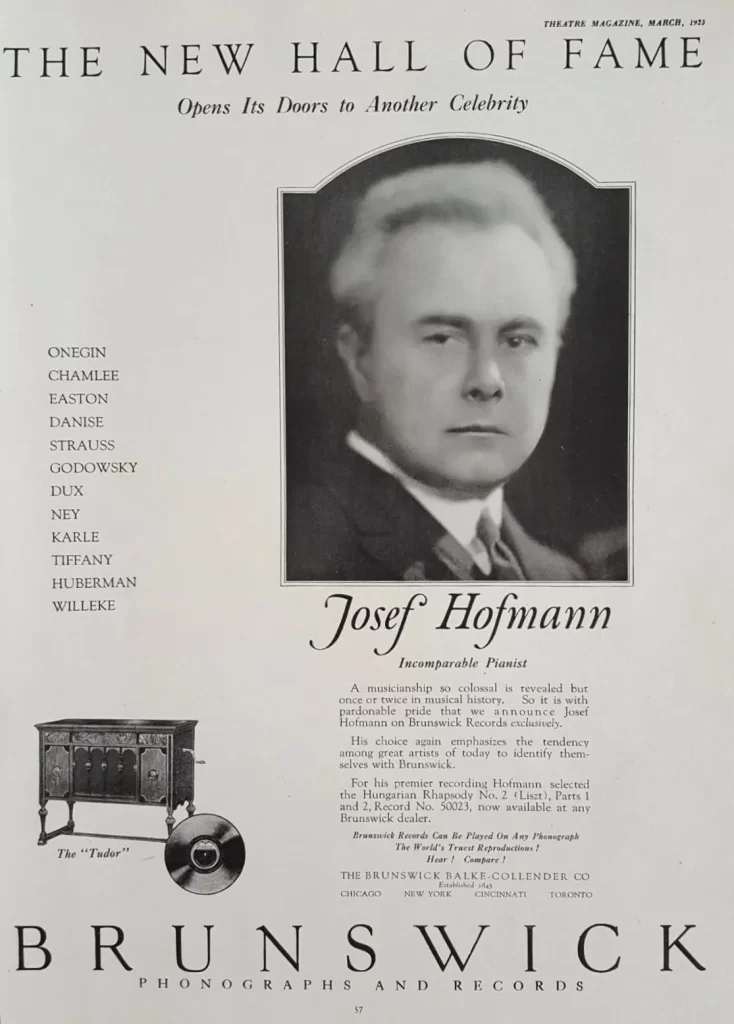
Hofmann’s April 27, 1923 recording of the Wagner-Brassin Magic Fire Spell (as it is called on the label) for Brunswick is perhaps one of the great pianist’s most incredible commercial discs for the same pianistic qualities heard in the cylinder recording produced 27 years earlier.
By this time, the 47-year-old Hofmann was extremely familiar with the technology and sonic range made possible through acoustical recording horn technology: he was a brilliant inventor with many patents to his name (among them windshield wipers, shock absorbers, and various piano mechanisms), so he knew exactly how to project his sound so that it would be well captured and reproduced during playback on the machines that were available at the time.
Hofmann was well aware that the piano essentially sounded like a banjo in these early recordings (his analogy), yet within the sonic confines of these recordings, his playing is impeccably balanced and poised, and as one’s ears adapt to the sonic framework – as one’s eyes adapt to notice the detail in a black-and-white photograph – the marvels of his playing become clear.
Unofficial Recordings
After producing several hours of these acoustical recordings – the final series being the aforementioned Brunswicks – Hofmann did not make more records when the microphone coming into use in 1925, despite the improved sonic framework and precision that this new technology permitted. The recent book Josef Hofmann: The Piano’s Forgotten Giant by Elizabeth Carr (click here) includes some fascinating insights drawn from letters that shed some light on his reasoning.
Among the factors impacting Hofmann’s view of recordings was that no technology could match the sound he produced in the hall, and so he recorded to the extent that the medium would permit in its early years: short works for home listening, with sound that could never be considered a replacement for a live concert experience. However, as the sound improved and more substantial works were more regularly being recorded, Hofmann turned down all subsequent offers to preserve more performances – and there were many: Charles McConnell of RCA Victor “stood at his door with a fountain pen and a blank contract and said, ‘Write your own ticket with Victor'” … and yet the pianist declined.
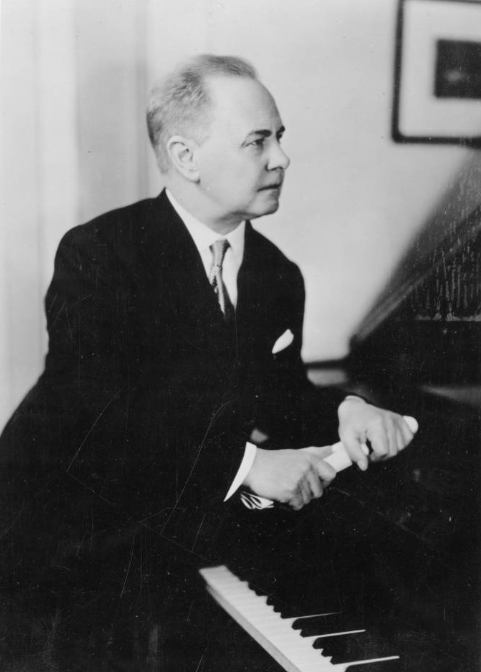
One reason for his refusal may be revealed by this fascinating insight in Carr’s book: in a 1955 letter, Hofmann noted “the microphone by far surpassed the hearing ability of the human ear. Thus when recording one has to behave oneself, which does not imply one should forgo one’s élan.” And so this might be the crux of the issue: Hofmann wanted to play freely yet without the microscopic magnification that the microphone and continually improving record techniques invited. He seems to have recognized and articulated one of the unintended consequences of the recording industry: musicians focusing on producing a note-perfect commercial product that required more control because any wrong note would be embedded in the performance, with a requisite loss in musical freedom and inspiration. Many decades after Hofmann’s astute observation, we are indeed living at a time when emotionally-restrained performances are featured in recordings made possible by microphones that capture every auditorily-microscopic detail (indeed, one wonders why present-day engineers place microphones inside a piano, where no one’s head would be when listening to a live performance) – and the concert halls today are also filled with performances that are more aligned with this kind of note-perfect-centred playing than with the freer approach that was once the goal of a concert.
However, despite his refusal to sign a contract to make more commercial recordings, Hofmann retained an interest in the technology and its evolution, so in 1935 he agreed to make some test records for both the RCA label in the US and the HMV label in the UK, recording five works for each. The RCA records were set down on April 19, May 2, and May 6 while the HMVs were produced in a single session on November 29. For whatever reason, none of these were released during the pianist’s lifetime, despite his overall satisfaction, particularly with the HMV set.
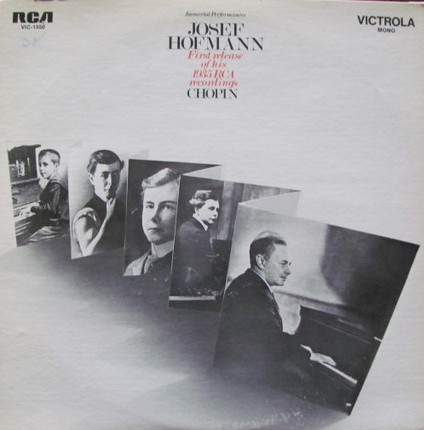
The request to do some ‘experimental’ recordings for RCA came from the Charles O’Connell (he who would continually show up with the blank contract and fountain pen) and fortunately Hofmann agreed to attempt to preserve his playing for the first time in over a decade. Over the course of three sessions – April 19, May 2, and May 6 – Hofmann recorded a few short works by Chopin (among them one Liszt transcription) and, perhaps most significantly, the first movement of Chopin’s Third Sonata, the largest-scale composition he recorded in the studio since his Liszt Hungarian Rhapsody No.2 set down in 1922.
For whatever reason – artistically or mechanically – O’Connell considered these recordings a ‘failure’ and they were never published. If they are somewhat sonically inferior to the HMV tests made later that year, the sound is still far better than anything else Hofmann had previously produced and the performances are utterly magnificent (there’s no ‘failure’ evident to my ears). Hofmann made multiple attempts at a few of the works – four takes of the Waltz Op.42 on three occasions and two of the Nocturne (the record ran out of time before he’d finished take 1); all surviving pressings were issued on the Marston set (click here), but I have only included one of each on this upload, in sequence of the final matrix numbers, as follows:
Chopin: Nocturne No.8 in D-Flat Major Op.27 No.2 (matrix CS 88938-2 – May 6, 1935)
Chopin-Liszt: Chant Polonais Op.74 No.1 – ‘The Maiden’s Wish’ (matrix CS 88958-1 – May 6, 1935) Chopin: Piano Sonata No.3 in B Minor Op.58, I: Allegro maestoso (matrices CS 88959-1 & CS 88960-1 – May 6, 1935)
Chopin: Polonaise in A Major Op.40 No.1, ‘Military’ (matrix CS 88961-1 – May 6, 1935)
Chopin: Waltz No.5 in A-Flat Major Op.42 (matrix CS 88962-1 – April 19, 1935)
The recordings would lay dormant in private hands until RCA finally released them on a long-playing record in 1970 with liner notes by Gregor Benko.
Here is that set of records, in Marston’s superlative remastering:
While the RCA set is magnificent, the HMV tests are especially worthy of attention given Hofmann’s apparent satisfaction with them in a November 4, 1955 letter to Steinway executive “Sasha” Greiner:
“The only ones that seem to me to be flawless are the 5 English recordings that I made in London at the end of November 1935. However, I made them in a studio, completely undisturbed and unagitated, which could not be said of my Jubilee Concert at the Metropolitan Opera House in 1937.”
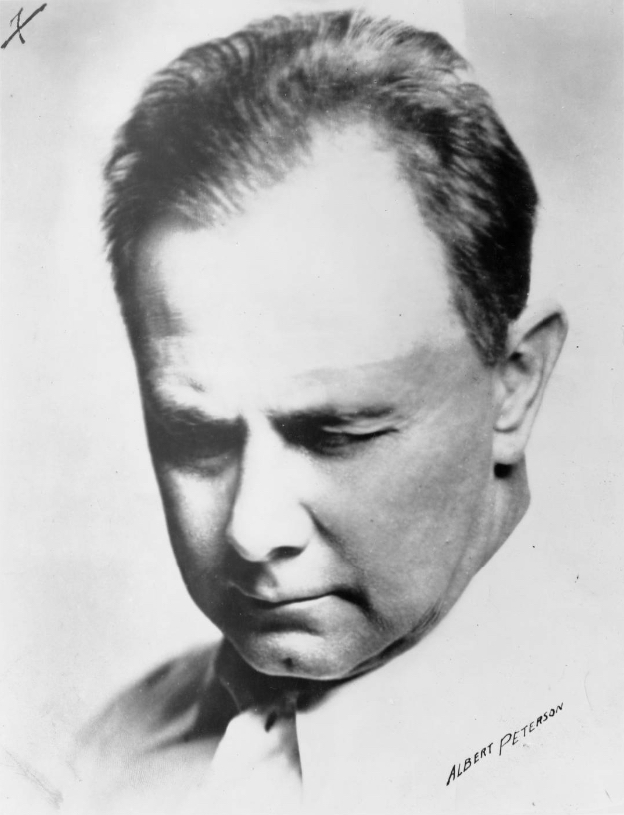
In the letter he authorizes copies of these recordings being sent to Emil Gilels, who appears to have requested a signed photo and recordings of the master after having heard an early acoustical recording and noting that no one played like that any more.
It is interesting to note that in the 1960s, HMV’s parent company EMI considered including these test discs in their Great Recordings of the Century series; sadly, this never transpired, a great loss given the dearth of Hofmann recordings at that time and the increased awareness to Hofmann’s artistry such a high-profile release would have facilitated.
The transfers made by Marston presented here from Volume 5 of their series were made using the pianist’s own set of test pressings. His playing throughout this series of discs features his unique tonal palette, incredible soaring melodic lines, impeccable balance of voices, magical pedal effects, and refined dynamic shadings.
The five works that Hofmann recorded in London on November 29, 1935 as tests for the HMV label, as featured in the clip below, are:
Chopin: Waltz in A-Flat Major Op.42
Chopin-Liszt: Chant Polonais Op.74 No.12 ‘My Joys’
Chopin-Liszt: Chant Polonais Op.74 No.1 ‘The Maiden’s Wish’
Chopin: Nocturne in F-Sharp Major Op.15 No.2
Beethoven: Sonata No.18 in E-Flat Major, Op.31 No.3: II. Scherzo
Hofmann In Concert
As Hofmann noted in the 1955 letter quoted above, there is the risk that when an artist plays for the microphone they might hold back, and this is why his broadcast and other concert recordings are so invaluable – though I will offer some more context about how this relates to other existing Hofmann recordings later in this feature.
Below is a March 15th, 1936 Cadillac Hour broadcast performance of the complete Beethoven Moonlight Sonata that is an example of Hofmann at his best, where there is both unfettered freedom and a performance that is superbly captured and reproduced. The first movement is one of the most spellbinding piano recordings I have ever heard, with incredible timing, tonal colours, and his patented soaring singing line that has perhaps never been so well captured by recording technology. As familiar as this music is, Hofmann presents it with both freshness and a personal framework that is highly alluring.
On first listen, some might find his timing to be ‘extreme’ but in fact, everything Hofmann does is related to the structure of the music and its emotional content: his shifts in timing take place at key transition points, and he simultaneously adapts dynamic levels, voicing, tonal colour, and other musical elements, creating a multidimensional adjustment well beyond simply ‘slowing down’. A performance for the ages and worthy of repeated listening.
Projection & Recording
As I note in my article about Hofmann’s recorded legacy in International Piano Magazine (click here), Hofmann was a master at understanding how to project his sound, and so his playing in the studio was tailored to both the microphone placement and how his playing would sound upon playback. This is not the case with the live recordings taken off the air or, as with his Golden Jubilee concert, recorded privately without his knowledge; on these occasions, his playing was directed at the listeners in the hall, so what is picked up by the microphone and reproduced does not fully represent how his sound and effects would be heard by listeners in the hall. The pianist himself stated as much in the aforementioned letter:
… I made them in a studio, completely undisturbed and unagitated, which could not be said of my Jubilee Concert at the Metropolitan Opera House in 1937…
while in another letter to Greiner a month later, he elaborates more:
Of course to reach a large audience and, as at my GJ [Golden Jubilee] concert, at the same time to do justice to the microphone is simply impossible even if one is aware of the latter, and this is the reason for several ugly blasts that occurred.
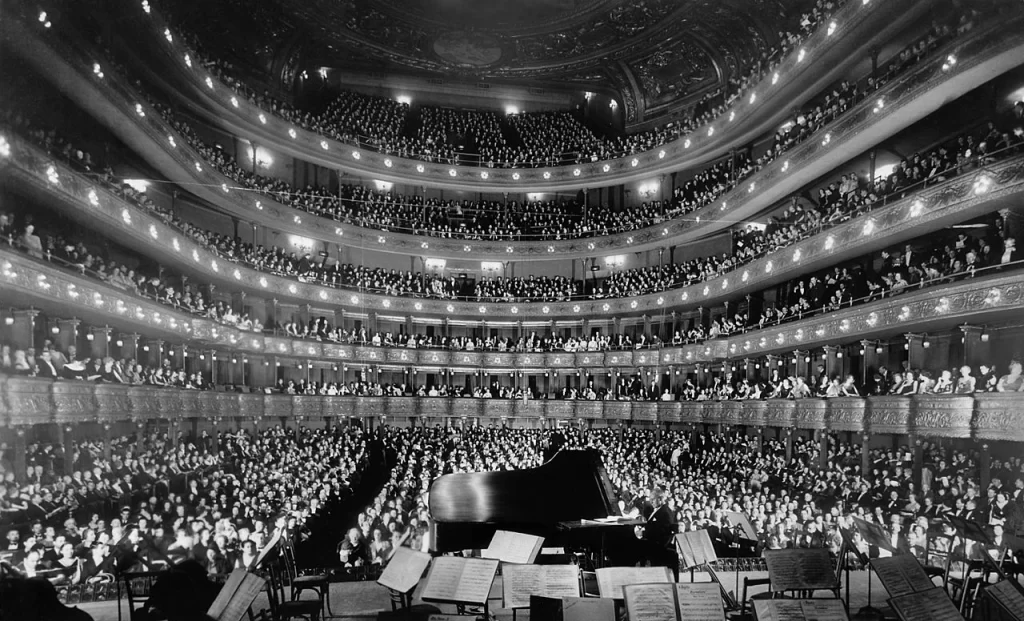
Hofmann did not know that he was being recorded when he played his 50th anniversary concert – his Golden Jubilee – at the Metropolitan Opera House in New York, where as a boy he had given a sensational debut in November 1887 (the year he is reported to have made the Edison cylinder). It was a remarkable occasion and to commemorate the event Hofmann’s wife arranged for RCA engineers to record the event (you can see a microphone high up above the piano in the incredible photograph taken from the back of the stage during the concert). Private copies of the records were made for friends and family, and it was never intended to release the performance, and while Hofmann did share such copies, as the letter above indicates, there were certain nuances where the microphone did not do justice to how he was playing because he was projecting in a certain way so his playing would be transmitted to the audience, not to the microphone above him – hence his reference to certain volcanic sounds as ‘ugly blasts’. It is worth noting that in the recording of Rosita Renard’s legendary 1949 Carnegie Hall recital, there are similar volcanic bursts of energy that someone listening to the recording could state is ‘banging’ – but a critic in the hall reviewing the concert made a point of noting that she played with power but did not bang (that was the word he used), further indicating that recordings of such events do not necessarily capture in a recording and then on playback the effects that the artist was projecting for those who were present.
This is not the say that there is not an abundance of miraculous pianism to be marvelled at in the recording – I write about the background to the recording and its availability in a feature on my website (click here) (though I do not note Hofmann’s observations – and my own – about the issue of playing to the microphone or the audience). You can also hear the full concert below:
There was a simultaneous shift with the improvement of recording technology and changes that took place in Hofmann’s playing due to his life circumstances which must also be considered: in other words, how he played in his later years with higher-fidelity sound capture was different than his style (both in general and in the studio) in the years he made his more primitive-sounding studio recordings. His personal life had countless challenges and he became a heavy drinker, so his playing could be inconsistent in later years – at the time that more broadcasts were being captured off-the-air. As a result, some of these performances do him little justice and must be recognized as less-than-ideal examples of his artistry.
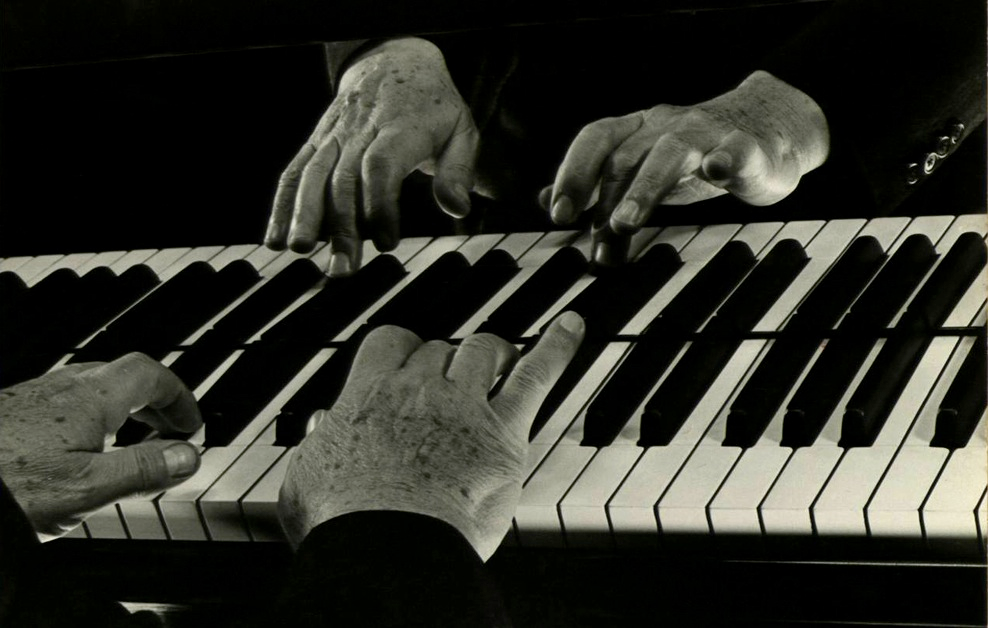
Some performances, however, are absolutely superb – yet these should still be taken in context, both biographical and technological. One such example is the Casimir Hall recital of April 1938, which happens to have been my first exposure to Hofmann’s playing. After I had read about Hofmann in Harold C Schonberg’s book The Great Pianists (which was a kind of training manual for me in those pre-internet days) and months of scouring second-hand shops, one day I hit the jackpot and came across a 2-LP set of this 1938 Hofmann recital released by the International Piano Archives on sale for a only few dollars. I still remember vividly the anticipation on the bus ride home and then sitting in an Arne Jacobsen chair in my family living room experiencing a second-by-second disintegration of my perceptions of musical interpretation and piano playing as I listened – with my jaw literally dropped and eyes wide open – to Hofmann’s otherworldly reading of Beethoven’s Waldstein Sonata. I sat in absolute shock as I heard voicing, sounds, and phrasing unlike anything I could have conceived, especially stunned by what seemed like a melting effect that naturally seemed impossible on an instrument with fixed notes like the piano. I was not immediately enamoured by everything I heard but knew this was at least in part due to the unfamiliarity of what I was hearing. (A fellow music student had a similar reaction a couple of years later when I played him the G Minor Ballade from Hofmann’s Golden Jubilee recital: his eyes wide open, he stared in disbelief and simply said, ‘I never imagined that such playing was possible.’)
What I didn’t know at the time was that Hofmann had just learned that he was effectively being ousted from the Curtis Institute of Music that he’d been leading and also that the concert was recorded without his knowledge, with less-than-ideal microphone placement. These two factors require us to adjust our ears to hear beyond the sonic parameters of this fly-on-the-wall performance. Fortunately the latest mastering by Marston (click here) is vastly improved from earlier LP incarnations, revealing more of the tonal beauty that those familiar with Hofmann will recognize despite some ever-present sonic challenges. One of the major highlights – in addition to the opening Waldstein Sonata – is the F Minor Ballade of Chopin, an explosive, impassioned performance that is sky-opening in its scope. The entire recital can be heard below:
Performances with Orchestra
Given that Hofmann never made a studio recording of anything beyond two 8-minute solo works – one the Liszt Rhapsody in 1922, the other the unissued Chopin Sonata movement in 1935 – the fact that we can hear him in several concerto performances is absolutely remarkable. We have both Chopin Concertos with Barbirolli at the helm, the F Minor perhaps the more successful of the two: the first movement in the E Minor is pianistically marvellous but seems to be a bit emotionally detached (the same could be said about parts of his three existing Beethoven G Major Concerto performances). We have a dramatic Chicago concert performance of the Emperor Concerto from at a time when Hofmann was less regularly in good form but this is a particularly fine traversal, and there are recordings of him playing his teacher Anton Rubinstein’s 3rd and 4th Concertos.
The 1936 New York broadcast of the Chopin F Minor Concerto with John Barbirolli conducting was the first record issued by the fledgling International Piano Library (later International Piano Archives) in the mid-1960s. Considering Hofmann had been dead for less than a decade but his recordings unavailable since the 1920s, the recording’s availability and the performance therein was a revelation, and music lovers who heard about its release through the grapevine (in the days before the internet) lined up around the block to buy their LPs of this otherworldly performance. Newer source material and remastering techniques now enable us to hear this performance in better sound than ever before:
The aforementioned 1940 Chicago concert performance of the Emperor Concerto deserves special mention and attention, as it finds Hofmann in particularly fine form at a time when his playing could be inconsistent at best. With great power and elegance, he delivers a reading that volcanic one moment and elegant the next.
We are fortunate to have some brief moments of film footage of Hofmann as well, though these come from a time when he and his playing were generally a shadow of their former selves. Nevertheless, the opportunity to see the master at work is one that should not be missed: the economy of motion and focus is fascinating to observe, and even if he was not in his prime, there is some great playing to be heard and insights to be gleaned.
As noted above, Hofmann’s playing was inconsistent in his later years, so his earlier performances tend to be stronger – yet there could still be magic in his later years. In 1945 when he was generally not playing well, Hofmann broadcast the slow movement from Chopin’s 2nd Concerto and it might be even more remarkable than his playing in the more famous broadcast from 1936.
Final Performances
While Hofmann’s programmes centred on Romantic repertoire, with of course an additional focus on the likes of Beethoven, there are some recordings that capture him in works beyond those with which he is generally associated. With his astonishing musical mind and capacity to do anything he wanted at the piano, when inspired he could illuminate any score he chose to play. This 1946 Bell Telephone Hour broadcast of Debussy’s popular Clair de lune – made when the pianist was 70 years old and less active on stage – is a case in point, with ethereal tone (what a soaring singing sound), exquisite phrasing, masterful pedalling, and impeccable timing.
A final performance is one of the last we have: a home recording that Hofmann made in 1948, when he was experimenting with sound capture and reproduction, of the Mélodie from Orfeo et Euridice. Once again we hear the finest qualities of Hofmann’s pianism: that crystal-clear singing tone – almost unlike anything we can expect from a piano – along with his transparent voicing, natural timing, and gorgeous pedal and tonal effects. Utterly beguiling playing from one of the true originals of the keyboard, one whose unique qualities are a must for all lovers of the piano – paradoxically fiery and cool, cerebral and emotional, individual and objective.